Case Studies
Results That Speak for Themselves
Real campaigns, real numbers. Explore how we've helped brands across industries achieve measurable growth.
Every agency says they're strategic. Here's the specific difference in how we think, how we work, and what we deliver — and why it matters for your business.
Most agencies start executing before they think. They pick keywords, write content, build links — and call it a strategy. We don't work that way.
Before any execution begins, we design the system. That means a complete strategic blueprint: market demand analysis, revenue-aligned information architecture, keyword-to-page mapping, programmatic logic (where applicable), and a clear model of how organic search connects to your actual business outcomes.
We call this the Organic Growth Foundation™. It's a paid strategic deliverable — not a free audit — because it's genuinely valuable on its own, regardless of what happens next.
The difference is simple: agencies that execute without architecture waste your time and your budget. We eliminate that waste before a single page goes live.
What this means for you: You always know what's being built, why it's being built, and what it's expected to produce. No guesswork. No retrofitting strategy onto execution that's already happened.
We don't just translate strategies into Arabic. We rebuild them for the market.
Arabic-speaking markets — Saudi Arabia, UAE, Kuwait, Qatar, Bahrain, Egypt — have distinct search behavior, different intent patterns, different conversion logic, and competitive landscapes that look nothing like what Western SEO benchmarks describe. Understanding the difference between Egyptian Arabic and Gulf Arabic search behavior is not a minor detail. It's the difference between a strategy that works and one that looks good in a report.
We've operated in these markets long enough to understand the nuances that matter: how users in KSA search for professional services versus how users in Egypt do, which query formats indicate commercial intent in Arabic, and how to structure content and architecture for multilingual demand without creating duplication or dilution.
What this means for you: If the GCC or MENA is your market — or where you're expanding — you're working with a team that already understands it at the depth that drives results.
Organic growth at scale requires a different kind of thinking. Manually produced content and one-at-a-time page optimization have a ceiling. Platforms, marketplaces, and multi-product eCommerce brands hit that ceiling fast.
We design for scale from the beginning. That means programmatic SEO architecture where the product or inventory data powers scalable page generation — city-level, role-level, product-level, symptom-level, or however your demand maps. It means template logic built for crawl efficiency and indexation control. It means internal linking systems that compound authority across thousands of pages rather than concentrating it in a few.
Sabbar — now one of Saudi Arabia's leading job marketplaces — scaled from zero non-branded traffic to dominant rankings across hundreds of high-value queries. That wasn't content. It was architecture.
What this means for you: If your market has scale opportunities, we build the infrastructure to capture them — not a content plan that maxes out at 20 articles a month.
Traffic is not the goal. Qualified buyers reaching the right pages and converting — that is the goal.
We align every part of the SEO strategy to your revenue model from the start. Which keyword clusters drive the highest-margin customers? Which pages are closest to purchase intent? Which content is bringing in traffic that never converts and should be deprioritized? These are the questions we use to make decisions — not "how can we grow sessions month over month."
Our reporting doesn't celebrate impressions. It tracks organic revenue contribution, conversion rates from organic traffic, and the share of qualified demand we're capturing versus what we're leaving to competitors.
What this means for you: The reports you receive make sense to a business owner, not just an SEO analyst. Everything connects back to commercial outcomes.
We work with a few core clients at any given time. That's not a constraint — it's a deliberate design choice.
High-volume agencies that manage 50 or 100 clients simultaneously are, by definition, unable to give any single client the strategic depth and senior-level attention that produces outsized results. The math doesn't work. Junior teams follow templates. Account managers rotate. Strategy becomes reactive.
We operate differently. Every client engagement involves senior-level architectural thinking, documented SOPs for every process, and a working relationship where we actually know your business — your product, your competitive position, your customers, and your goals.
What this means for you: You're never a ticket in a queue. You're a core engagement. And the quality of output reflects that.
Search is no longer just Google. ChatGPT, Perplexity, Gemini, and Bing AI are now discovery channels. Users are asking AI systems direct questions and receiving direct answers — with citations. Your brand either appears in those answers or it doesn't.
The good news — and what most AI-SEO trend pieces get wrong — is that the foundations of appearing in AI-generated answers are the same foundations of serious SEO done correctly: entity clarity, structured content, semantic depth, authoritative backlinks, and brand mentions across trusted sources. GEO (Generative Engine Optimization) and AEO (Answer Engine Optimization) are not separate disciplines requiring separate budgets. They are natural outputs of an SEO system built with the right architecture.
We integrate AI search visibility into every engagement — not as an add-on, but as a structural layer. That means entity mapping so AI systems understand what your business is and what it's authoritative about, content structured for direct extraction and citation, and an authority profile that makes you a trustworthy source across both traditional and AI-powered discovery.
We've already seen clients receiving thousands of AI citations daily — not because we ran a GEO campaign, but because we built the system correctly.
What this means for you: Your organic infrastructure is ready for where search is going — not just where it's been. You capture demand across Google, AI Overviews, ChatGPT, Perplexity, and whatever comes next, without rebuilding your strategy every time the landscape shifts.
Average organic traffic growth across all active accounts
Client retention rate after the first 12 months
Organic revenue directly attributed to SEO Acuity
Algorithm penalties across all client history
Every one of the six points above is a function of how SEO Acuity is built — not what we decided to say on a website. The capacity model enforces quality. The architecture-first process enforces strategic clarity. The GCC specialization is years of real market experience. The AI readiness layer is already producing results for current clients. If this sounds like the kind of partner you've been looking for, the next step is straightforward.
Book a free discovery callReal campaigns, real numbers. Explore how we've helped brands across industries achieve measurable growth.
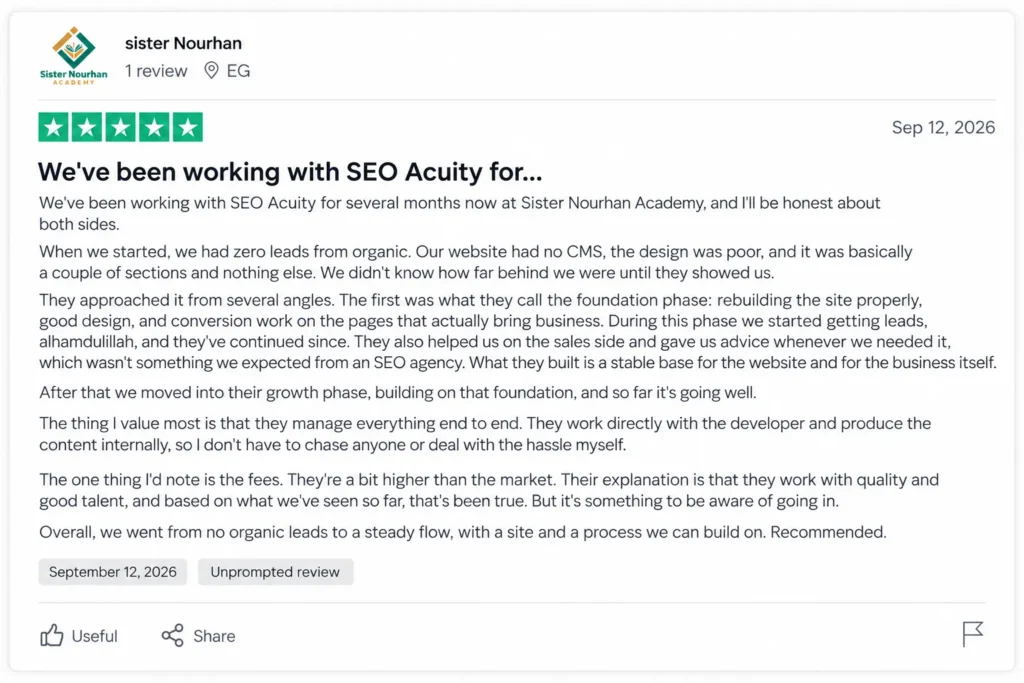
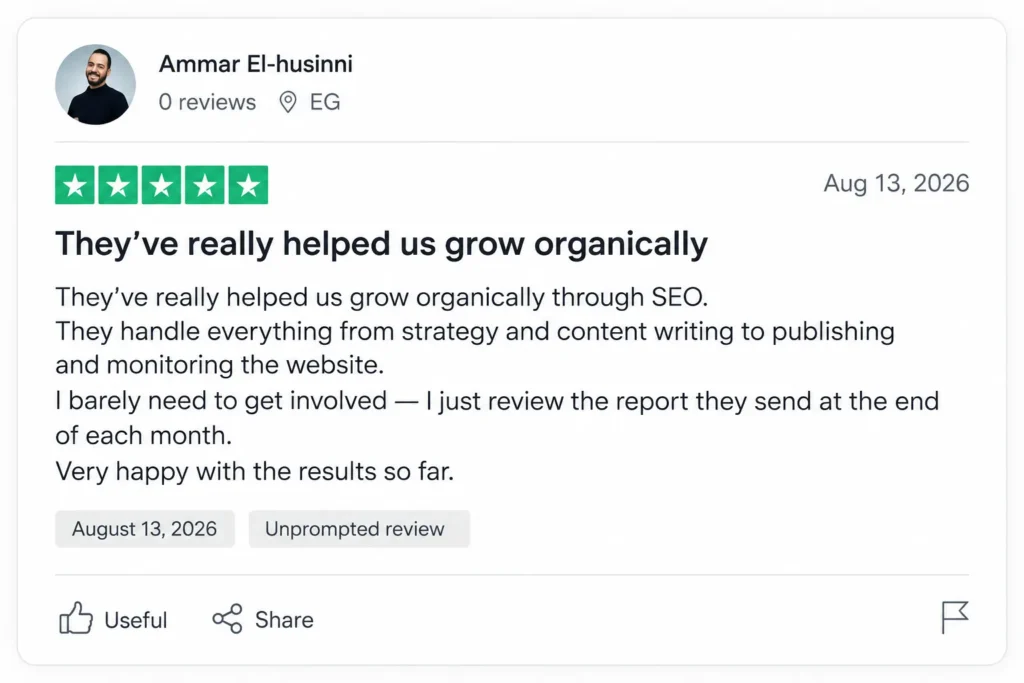
Don't take our word for it. Here's what the brands we've helped have to say about working with SEO Acuity.
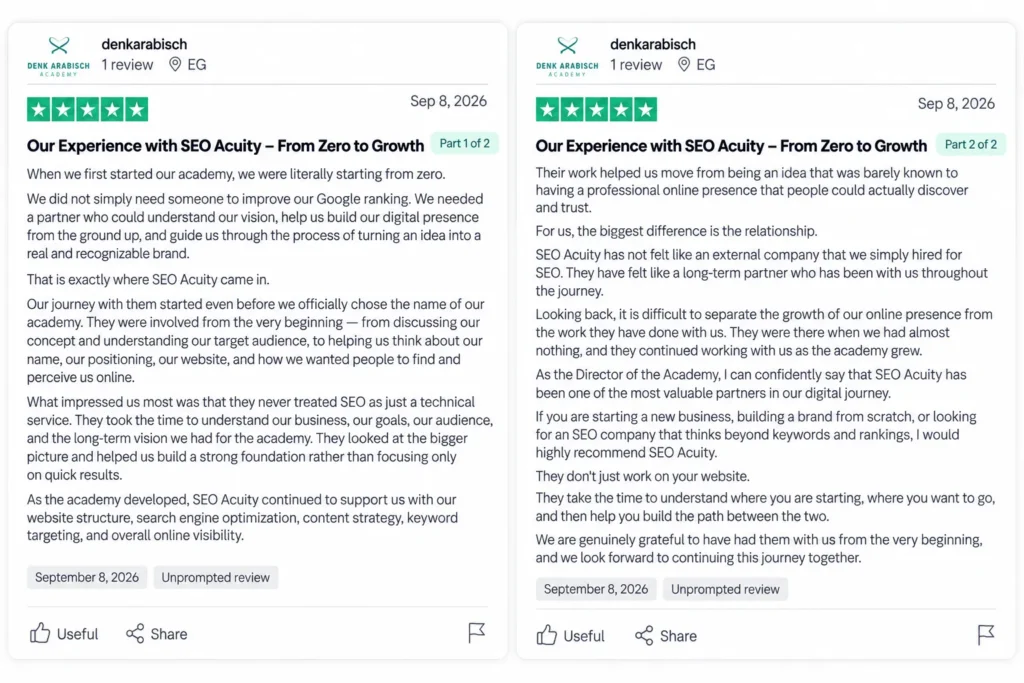
As an online institute, SEO is one of our highest priorities. We have worked with a number of SEO specialists and agencies over the years, but our partnership with SEO Acuity has been the longest and most rewarding by far — and we sincerely hope to continue it for as long as possible. What makes SEO Acuity truly unique is their combination of organization, experience, diligence, honesty, and creativity. If you are looking for all of that in one team, you are in the right place. Thank you all.
Read More...
Working with SEO Acuity has been a game-changer for our business. What sets them apart is their strategic, data-driven approach that goes far beyond basic SEO. From day one, it was clear that their mission wasn't just to improve rankings — it was to help us dominate our market.They don't just execute — they guide, educate, and align with your internal teams like a true strategic partner.Highly recommended for businesses with bold goals.
Read More...
From limited site traffic to heavy traffic, from a low conversion rate to a great rate, and from a low ranking in search engines to a very advanced ranking — all this is thanks to Allah, then the wonderful, tireless work of the SEO Acuity team. I have advised, and will always advise, everyone who wants to occupy a prominent position in their field to work with SEO Acuity.
Read More...
A Truly Professional SEO Partner. Working with SEO Acuity has been one of the best decisions I’ve made for my business. From the start, their team was attentive, professional, and genuinely invested in helping us grow. They didn’t just offer a solution, they tailored a strategy that really fit our goals. Communication was clear, updates were timely, and we saw real improvements in our rankings.
Read More...
SEO Acuity is a very professional and honest agency. They provide high-quality services to their clients. Our experience with them was excellent, and we are very thankful for their great work. We highly recommend them to anyone looking for high quality at a great value.
Read More...
This is the first time I recommend anyone on LinkedIn, but SEO Acuity — truly deserves it. We worked together on Shaykhi Academy's website as long as the other sister sites, and if you decide to partner with them, I can assure you that you've made the right choice! This is because of three reasons: They combine deep knowledge with real-world experience. They stay consistently up to date with Google's latest updates. They are genuinely honest and highly professional.May Allah bless them!"
Read More...
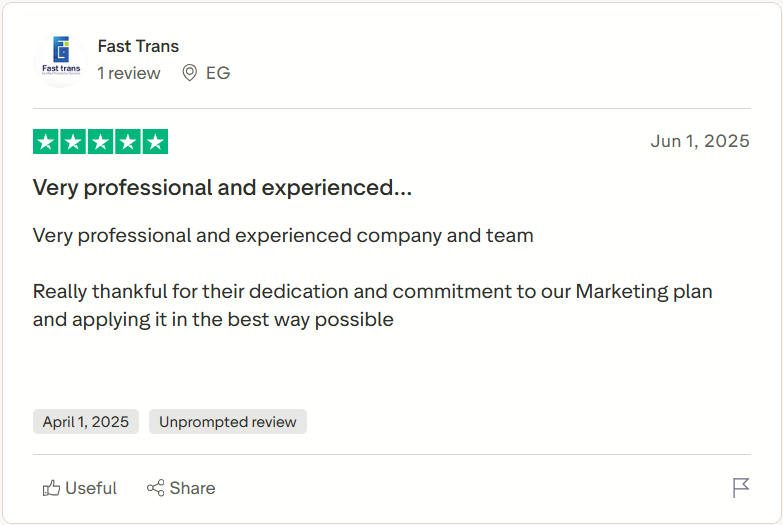
I had the pleasure of working with SEO Acuity at Fast Trans, where they served as our SEO experts. As Co-Founder, I witnessed firsthand the tremendous impact SEO Acuity had on our online presence.They expertly established our website and implemented a comprehensive SEO strategy, significantly boosting our search engine rankings. Their work led to a remarkable increase in organic traffic and user engagement.SEO Acuity is a consummate professional agency and a great collaborative partner. They consistently delivered high-quality results and were always open to innovation. Their dedication and expertise were invaluable to our success.I highly recommend SEO Acuity to any organization seeking an outstanding SEO partner. Their skills and commitment are truly exceptional.
Read More...
Ahmed leads one of the most talented and organized SEO agencies you will ever work with. They operate with a clear methodology and strategy from the very beginning all the way through to achieving results. I highly recommend SEO Acuity for their outstanding expertise!
Read More...
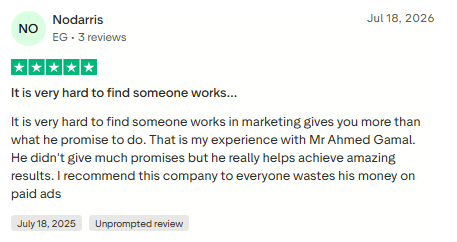
SEO Acuity, led by Ahmed Gamal, is incredibly dedicated, always focused on getting real results, and their attention to detail is second to none. What really stands out is Ahmed's ability to consistently come up with fresh, innovative ideas that make a real difference in how we work and the outcomes we achieve. They are great at managing time and priorities, making sure everything runs smoothly. SEO Acuity is a talented, forward-thinking agency, and I highly recommend them!
Read More...
I had the pleasure of working with SEO Acuity, led by Ahmed Gamal, on Sabbar's website SEO. Their expertise greatly improved our search visibility and traffic quality. They consistently provided clear, detailed reports and proactive recommendations that were both actionable and impactful. I highly recommend SEO Acuity to anyone looking to enhance their online presence.
Read More...
I had the pleasure of supervising and working closely with the SEO Acuity team, led by Ahmed Gamal, and I can confidently say that their contributions were instrumental to our success. The results-driven approach and strategic thinking helped us achieve significant improvements in our online visibility and search rankings.What sets SEO Acuity apart is their unwavering dedication and passion for the work; consistently delivered innovative solutions that directly impacted our traffic and overall digital presence. His attention to detail and ability to manage complex tasks with ease made the entire process seamless.On a personal level, the team is an absolute joy to work with. His professionalism, combined with a genuine love for what he does, makes SEO Acuity a standout in the field. I highly recommend SEO Acuity to anyone looking for an SEO partner who not only delivers results but also brings positivity and dedication to the table.
Read More...
Working with SEO Acuity Lead By Ahmed Gamal on our projects at Zamn was a standout experience. Every project was completed successfully and with excellent results. What sets them apart in SEO is that he treats each client's project as his own — with genuine ownership and long-term commitment. Even after the engagement ends, he continues to provide guidance and improvement advice. I wholeheartedly recommend them to anyone looking to grow through SEO or data-driven reporting.
Read More...
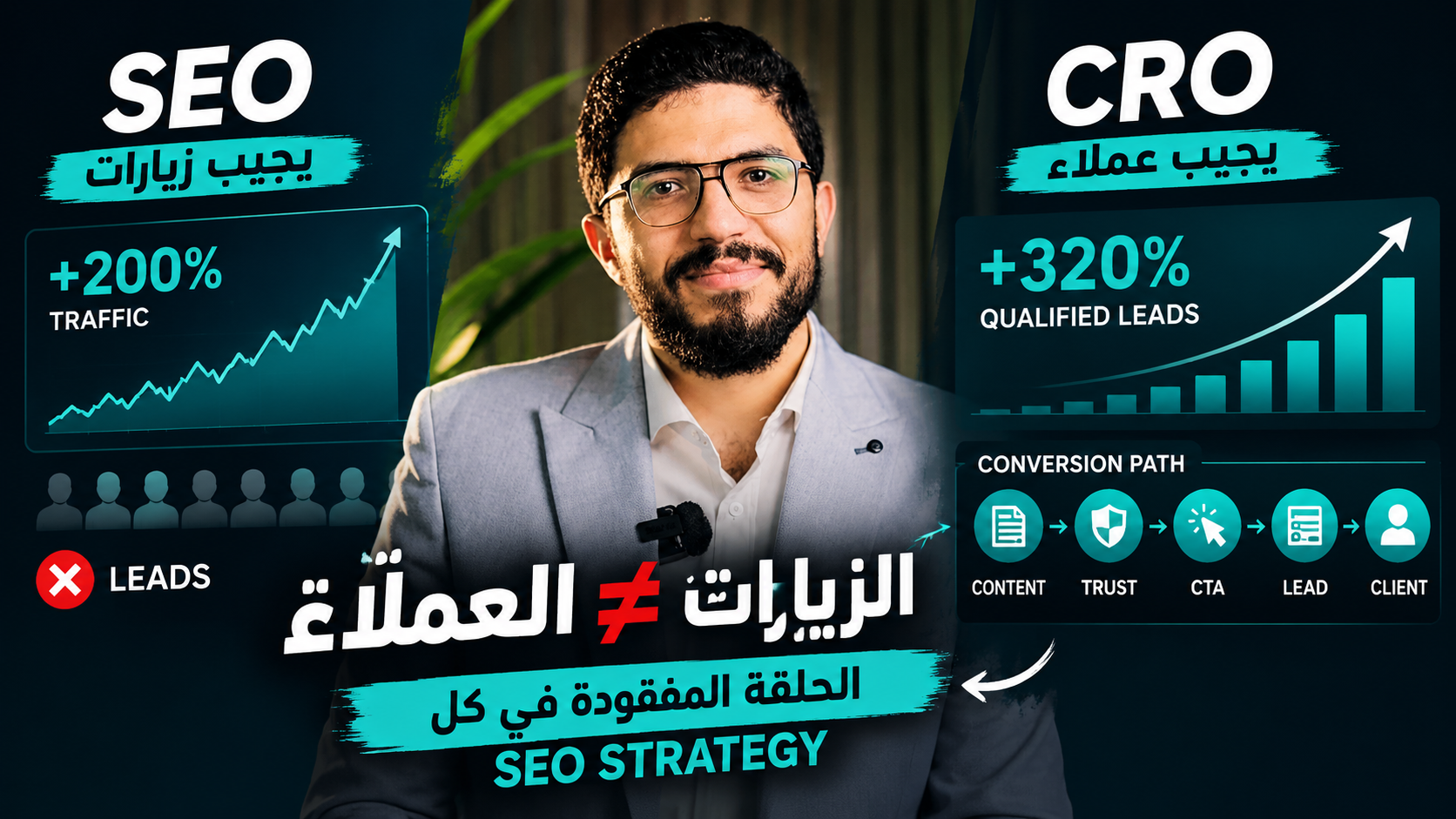
Explore practical SEO knowledge designed to help you grow your website and improve your online visibility. Our team shares clear, actionable videos covering search engine optimization, content strategy, technical SEO, and digital marketing tips—so you can stay updated and apply proven techniques to your own projects.

"Very professional and experienced company and team"