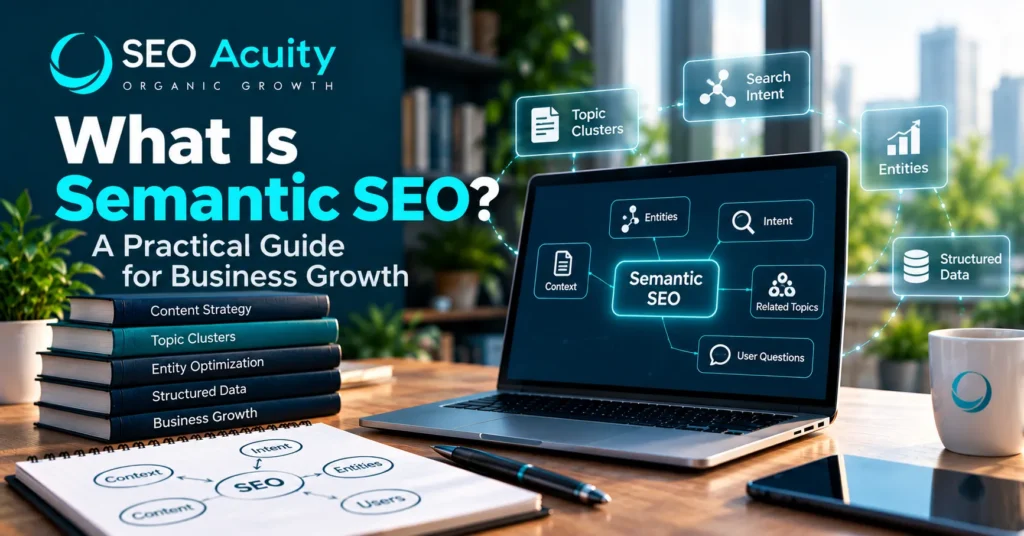
Semantic SEO is an approach to search optimization that focuses on the meaning, context, and intent behind a search query, rather than isolated keyword matching.
Instead of targeting a single phrase, it addresses a topic through related concepts, entities, and the questions a searcher is genuinely trying to answer.
This page is designed for business owners, marketing teams, and website owners who want to understand what semantic SEO is, why search engines have shifted toward it, and how SEO Acuity approaches semantic optimization as part of a broader SEO strategy.
If your organic visibility depends on more than a handful of exact-match keywords, semantic SEO is directly relevant to your growth plans.
What You Will Learn
- The exact definition of semantic SEO and how it differs from traditional, keyword-only optimization.
- The main problems semantic SEO helps solve, from missed related searches to thin content that fails to build topical authority.
- The core components of a semantic SEO approach, including entity-based optimization, topic clusters, search intent alignment, and structured data.
- How a semantic SEO strategy is typically applied, from intent and topic analysis through content structuring and internal linking.
- The realistic benefits semantic SEO can bring, and why SEO Acuity builds this into its broader SEO strategy for clients.
Semantic SEO Explained
Semantic SEO is the practice of structuring and writing content so that search engines can understand what a page is about at the level of meaning, not just at the level of individual words.
It draws on natural language processing, entity recognition, and topic modeling to connect a page to the full scope of a subject.
In practice, this means a page is built around a core topic and its related subtopics, questions, and terminology, rather than around a single keyword repeated at a set frequency.
The goal is for search engines, and increasingly AI-powered search systems, to recognize the page as a comprehensive and relevant source on that topic.
This approach is relevant to any business that depends on organic search visibility, particularly in competitive categories where thin, keyword-only content no longer performs well.
SEO Acuity applies semantic SEO principles as part of its content and on-page optimization work, alongside the technical and strategic elements of a search program.
If you’re ready to see what that could look like for your website, request a Free SEO Quote from SEO Acuity.
Read also: Ethical SEO Agency – How to Choose the Right SEO Partner?
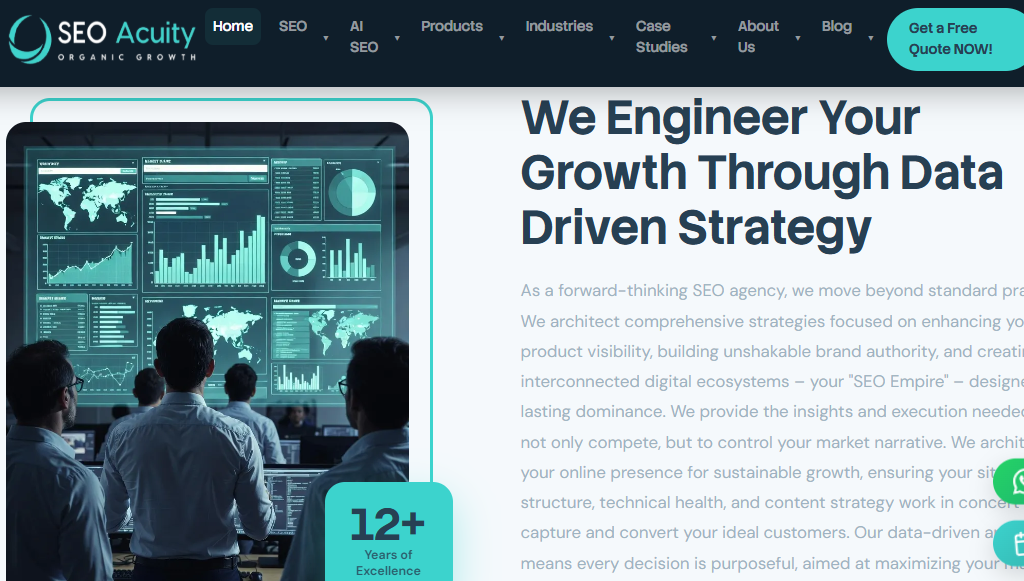
Common Problems Semantic SEO Helps Address
Semantic SEO isn’t just a technical add-on — it directly fixes some of the most common reasons content underperforms in search. Here’s a look at the core problems it addresses.
1. Content Ranks for Isolated Keywords but Misses Related Searches
A page optimized only for one exact phrase can miss the broader set of related queries people actually use. Semantic SEO expands a page’s relevance to the full topic, which can help it surface for a wider, more relevant range of search terms.
2. Search Engines Struggle to Understand What a Page Is About
Ambiguous or shallow content makes it harder for search engines to classify a page correctly. Building content around clearly defined entities and their relationships gives search engines stronger signals about the page’s actual subject matter.
3. Content Fails to Satisfy the Real Intent Behind a Search
A page can include the right keyword and still fail to answer what the searcher actually wanted, whether that intent is informational, commercial, or transactional. Aligning content structure with search intent is a core part of semantic SEO.
4. Thin Pages Don’t Build Authority on a Topic
Single, narrow pages rarely establish a site as a trusted source on a subject. Organizing related content into topic clusters, connected through internal links, is one way semantic SEO supports broader topical authority over time.
Read also: Best Boutique Seo Agency – 10 Specialized Agencies
Core Components of a Semantic SEO Approach
A strong semantic SEO approach rests on a few interconnected building blocks — not isolated tactics, but pieces that work together to help search engines understand context, not just keywords. Here’s what that typically includes.
1. Entity-Based Optimization
Search engines increasingly interpret content in terms of entities, such as people, organizations, places, and concepts, rather than isolated strings of text.
Clarifying which entities a page refers to, and how they relate to one another, helps search engines disambiguate meaning and connect a page to relevant knowledge structures.
Read also: 12 Best WordPress SEO Agencies for Better Rankings
2. Topic Clusters and Internal Linking
A topic cluster structure organizes a central pillar page around a broad subject, supported by related pages that go deeper into specific subtopics. Internal links connect these pages using descriptive, contextual anchor text, which helps both users and search engines navigate the full scope of a topic.
3. Search Intent Alignment
Search intent generally falls into informational, navigational, commercial, and transactional categories. Semantic SEO involves analyzing the intent behind a target query and shaping content format and depth to match what searchers with that intent are actually looking for.
4. Structured Data and Schema Markup
Structured data, implemented through vocabularies such as Schema.org, gives search engines explicit, machine-readable signals about a page’s content, such as its author, organization, or FAQ content.
This can support eligibility for rich results and gives AI-driven search systems clearer data to work with.
Ready to Dominate Search Engine Rankings?
Accelerate your organic growth and scale your business leads with our data-driven SEO strategies.
Get a Free Quote NOW!
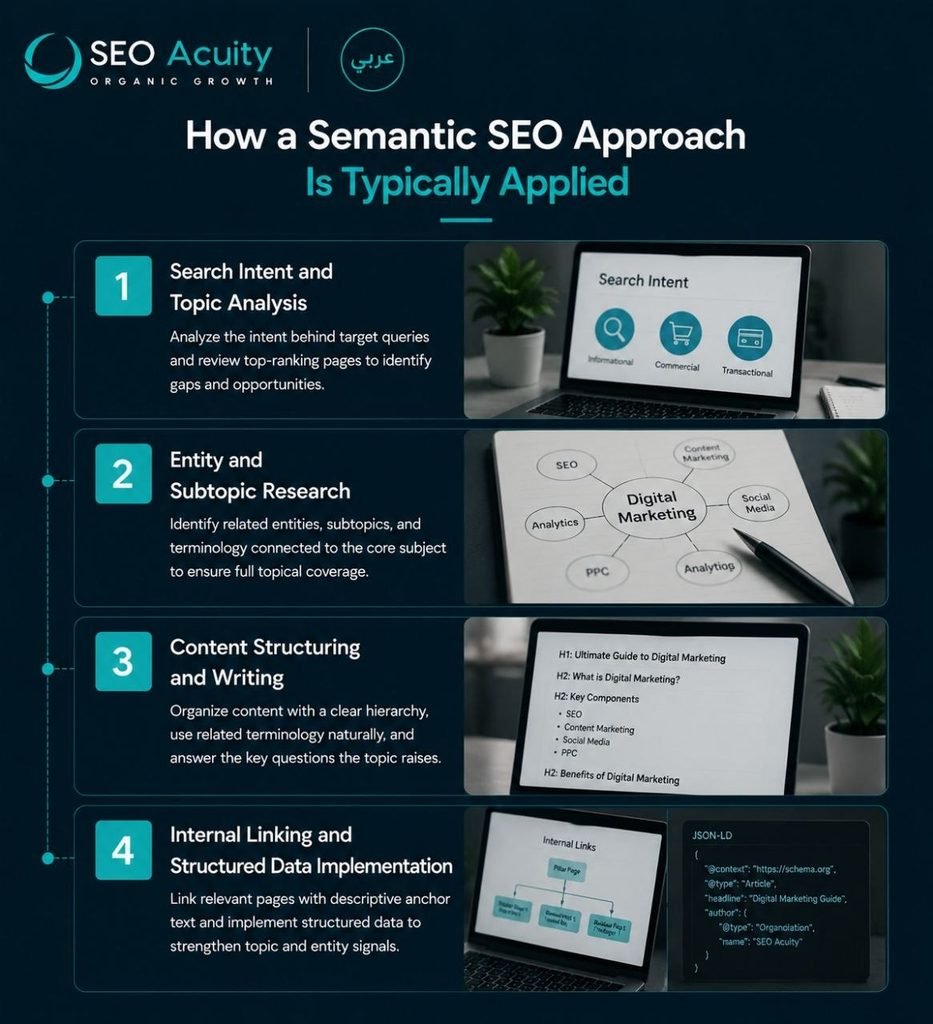
How a Semantic SEO Approach Is Typically Applied
Putting semantic SEO into practice follows a fairly consistent sequence — moving from understanding intent to structuring content in a way search engines can map to real-world topics. Here’s how that typically plays out:
1. Search Intent and Topic Analysis
The process typically starts with analyzing the intent behind target queries and reviewing how existing top-ranking pages address that topic, to identify gaps and opportunities.
2. Entity and Subtopic Research
Related entities, subtopics, and terminology connected to the core subject are identified, so that content coverage reflects how the topic is actually structured rather than a single keyword.
3. Content Structuring and Writing
Content is organized with a clear heading hierarchy, natural use of related terminology, and direct answers to the questions a topic naturally raises, rather than repeated exact-match phrases.
4. Internal Linking and Structured Data Implementation
Relevant pages are linked together with descriptive anchor text, and structured data is added where appropriate to reinforce the topic and entity signals already present in the content.
Potential Benefits of Semantic SEO
A semantic approach to SEO can help a website satisfy a broader range of related searches, since content is built around a topic rather than a single phrase. It may also support stronger topical authority as related pages accumulate around a well-linked cluster.
Because structured, entity-clear content gives search engines more explicit signals, semantic SEO can improve the chances of a page being understood correctly and considered for rich results or AI-generated search summaries.
These are realistic possibilities rather than guarantees, since search visibility depends on many factors beyond on-page optimization.
Why Consider Working With SEO Acuity
SEO Acuity incorporates semantic SEO principles, including topic and entity research, content structuring, internal linking, and search intent alignment, into its broader search optimization work.
If you would like specific details on current service packages, deliverables, and pricing, the most accurate source is a direct conversation with the team.
Rather than promising specific rankings or traffic outcomes, the value of working with an SEO partner comes from a clear process: understanding your site and industry, identifying relevant topics and entities, and structuring content and technical elements accordingly. You can discuss your specific goals by requesting a Free SEO Quote.
A Process-Based Approach to Trust
SEO results depend on many variables, including competition, site history, and technical factors, so no reputable provider can guarantee specific rankings or traffic.
What can be evaluated before committing to any service is the methodology behind it: how topics and intent are researched, how content is structured, and how internal linking and structured data are applied.
Ready to Dominate Search Engine Rankings?
Accelerate your organic growth and scale your business leads with our data-driven SEO strategies.
Get a Free Quote NOW!Get a Clear View of Where Semantic SEO Fits Your Strategy
If your current content targets keywords in isolation and you want to understand how a topic- and entity-based approach could apply to your site, the next step is a conversation about your specific situation.
We build strategies built for small businesses from the ground up
Ready to Discuss Your Website’s Search Strategy?
Understanding semantic SEO is a starting point. Applying it correctly to your specific site, industry, and audience is where a tailored strategy matters. Request a Free SEO Quote from SEO Acuity to talk through your current content.
Frequently Asked Questions
What is semantic SEO in simple terms?
Semantic SEO means optimizing content around meaning, context, and search intent, so that search engines understand the full topic a page covers rather than matching a single keyword phrase.
How is semantic SEO different from traditional SEO?
Traditional SEO focuses on exact keyword targeting and keyword density. Semantic SEO focuses on topics, entities, and the relationships between concepts, aiming to cover a subject comprehensively rather than repeating one phrase.
Do I still need keywords if I use a semantic SEO approach?
Yes. Keywords remain part of the process, but they are used naturally within context-rich content alongside related terms, entities, and subtopics, rather than repeated at a fixed density.
What is the role of semantic SEO in content marketing?
In content marketing, semantic SEO helps content address the full range of questions and related subtopics a reader has, which can support engagement and make a piece more useful as a comprehensive resource on its topic.
Can semantic SEO help with local search visibility?
It can contribute to local relevance when local entities, such as neighborhoods or service areas, are incorporated naturally into content alongside topic-focused terminology, though local visibility also depends on other local SEO factors.
Is semantic SEO a one-time project or an ongoing process?
Because search engines, content landscapes, and competitor content change over time, semantic SEO is typically approached as an ongoing process rather than a single project.