Shopify handles several technical SEO fundamentals automatically, including sitemap generation, SSL, canonical tags in supported themes, CDN-based image delivery, and URL redirects in certain workflows.
What the platform cannot do is choose your keywords, write your product content, structure your internal links, or earn the backlinks that signal authority to search engines. That remaining 20% is where every meaningful ranking decision gets made — and it’s entirely yours to own.
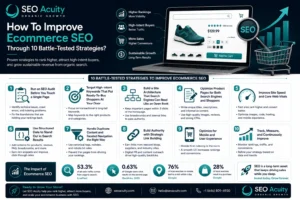
This guide covers how to increase SEO on Shopify across ten specific areas, from foundational keyword research to AI-powered search optimization. Each section builds on the last.
Execute them in order and you build organic traffic that compounds. Skip them in favor of apps and shortcuts and you get the plateau most Shopify stores eventually hit.
Book your consultation session now
1. Get Your Keyword Research Right
No strategy survives contact with the wrong keyword. Before you touch a title tag or write a single product description, you need a precise map of which search queries your buyers actually use — and which stage of the buying journey each query represents.
A. Map Your Keywords To Buyer Intent
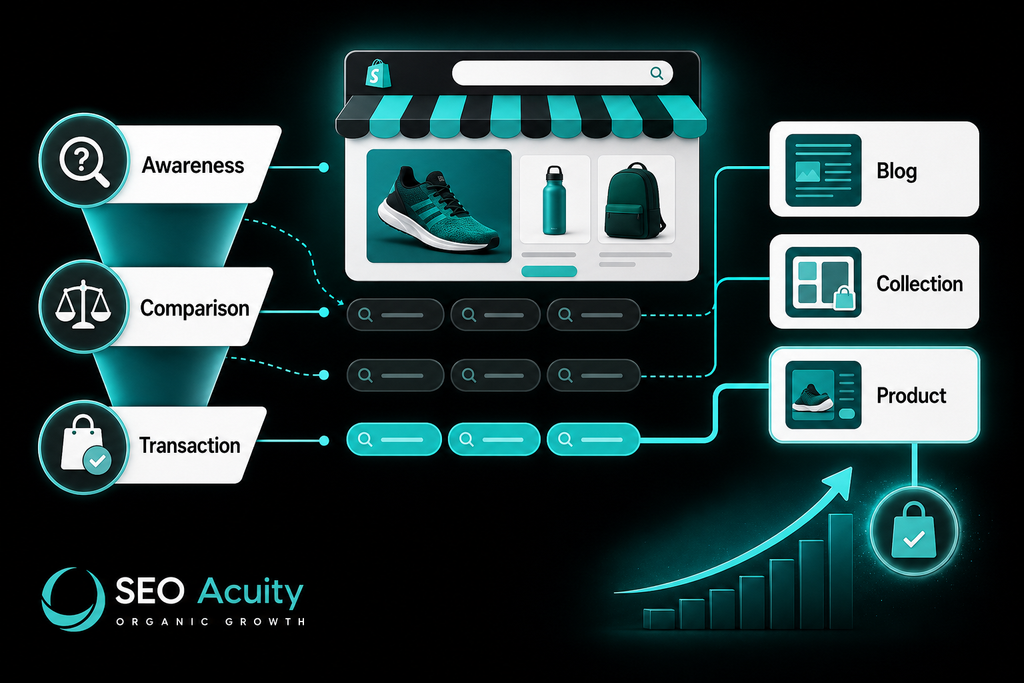
Three intents operate in any product category: awareness (“what is”), comparison (“best X vs Y”), and transaction (“buy X online”).
Shopify stores that rank consistently separate these intents across different page types — transactional terms go to product and collection pages, comparison queries go to blog content, and pure awareness terms rarely belong in an ecommerce store at all.
Trying to serve all three intents on one product page dilutes the signal for all three. Use Google Search Console to pull queries your pages already receive impressions for. Cross-reference those with competitor keyword gaps in Ahrefs or Semrush to surface terms you’re not yet ranking for.
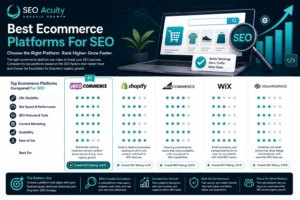
If you’re still weighing your platform choice as part of this process, a review of the best ecommerce platforms for SEO gives you useful benchmarks for where Shopify’s native capabilities actually sit.
B. Find High-Converting Keywords For Product And Collection Pages
Collection pages are the most underestimated ranking opportunity on most Shopify stores. A well-optimised collection page can own broad category queries, “men’s running shoes,” “natural skincare for sensitive skin”, that no single product page can reasonably rank for.
Build a keyword map: one primary term per page, two to four supporting modifiers (size, material, use case, finish), and a cluster of long-tail variants to seed the FAQ or body copy.
Google’s “people also ask” and “related searches” surfaces near-zero-cost intent data. Ahrefs’ Keywords Explorer and Semrush’s Keyword Magic Tool add volume, difficulty, and parent-topic groupings that make page-level keyword assignment straightforward.
C. Prioritise Transactional Terms Before You Chase Informational Volume
Informational content compounds over time, but it rarely converts directly. A blog post about “how to choose a running shoe” can reinforce your collection page’s authority — but it shouldn’t be your first investment. Get your product and collection pages ranking on commercial-intent terms first.
Once those pages are stable, informational content built around the same entity cluster multiplies their authority without cannibalising it.
Working with an ecommerce SEO consultant at this stage prevents the most expensive mistake: building a blog that earns traffic but no revenue, because no one mapped informational content back to commercial pages with deliberate internal links.
Explore how to Transform Your Financial SEO from Expense to Growth Engine
2. Optimize Your On-Page SEO Before Your Shopify Store Leaves Revenue on the Table
Getting keyword research right tells you where to aim. On-page optimization is where you pull the trigger. Most stores treat product titles and meta descriptions as operational necessities; their competitors treat them as conversion copy.
A. Write Product Titles And Meta Descriptions That Earn The Click
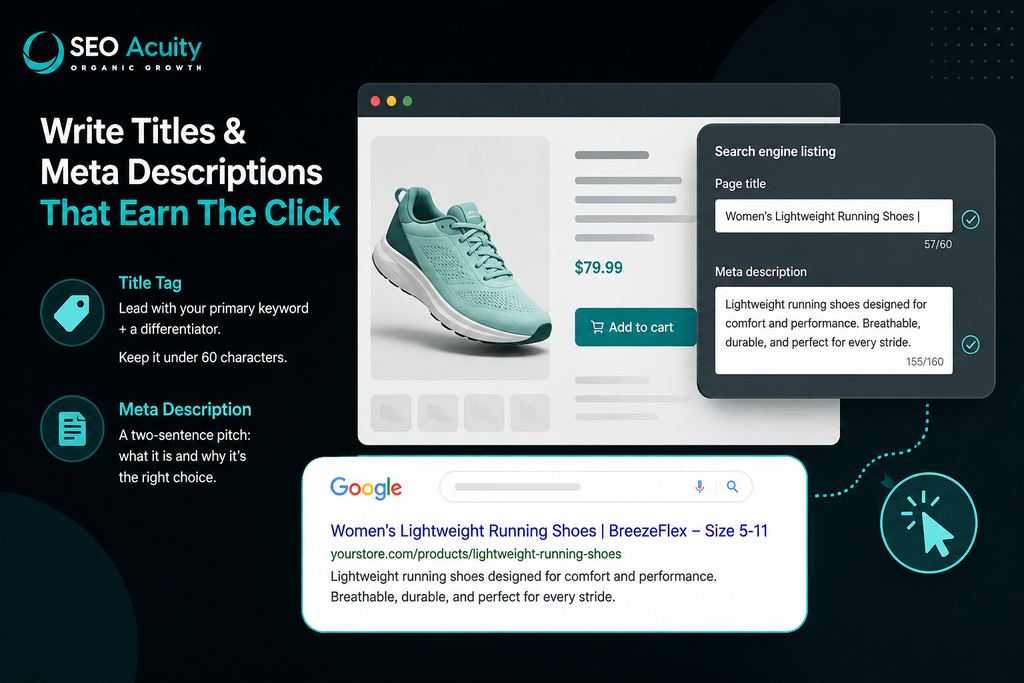
Your title tag is a paid-search headline you never paid for. Lead with the primary keyword, add a differentiator (brand name, material, size range), and stay under 60 characters. Your meta description doesn’t directly influence ranking, but it drives click-through rate.
Although meta descriptions are not direct ranking factors, compelling search snippets can improve organic click-through rate and bring more qualified visitors to the page.
Write it as a two-sentence pitch: what the product is and why it’s the right choice. Shopify’s default CMS maps your product name to both the H1 and the page title simultaneously.
Shopify initially uses the product title to generate the SEO page title, but merchants can customize the search listing title and meta description independently through the product’s search-engine-listing settings.
B. Pay Attention To URl Structure, Heading Hierarchy And The Details Most Stores Get Wrong
Shopify auto-generates URLs from the product or collection name and handles basic canonical logic well. What it doesn’t control is the bloat in URL slugs when product names are long or carry stop words.
Keep product handles short and keyword-focused and remove stop words. Prefer concise, descriptive handles such as: /products/blue-merino-crew-neck-sweater instead of unnecessarily long handles such as: /products/buy-the-best-blue-merino-crew-neck-sweater-online.
Heading hierarchy matters for AI search chunking as much as it matters for traditional crawling. Each H2 should announce a distinct sub-topic; each H3 should narrow it further. Never use a heading tag as a decorative divider.
Discover Why to Choose SEO Acuity for Off-Page SEO
C. Focus On The Product Copy That Closes The Gap Between Traffic And Transactions
Generic product descriptions are the most common reason a well-ranked Shopify page doesn’t convert. “High-quality materials, available in multiple sizes” tells the crawler and the buyer almost nothing useful.
Specific copy — “850-fill-power ethically sourced down, tested to −20°C, with a packable volume of 3L” — does both jobs at once: it differentiates the product, satisfies semantic search, and directly answers the buyer’s question.
For stores with more than fifty products, a content brief template that every new product page must satisfy before publication is not overhead — it’s the system that keeps your catalogue coherent at scale.
▶ Watch: How to Let Your Store Appear in Google and AI Search Results
Ready to Improve Your Search Engine Rankings?
Accelerate your organic growth and scale your business leads with our data-driven SEO strategies.
Get a Free Quote NOW!3. Close Shopify’s Technical SEO Gaps
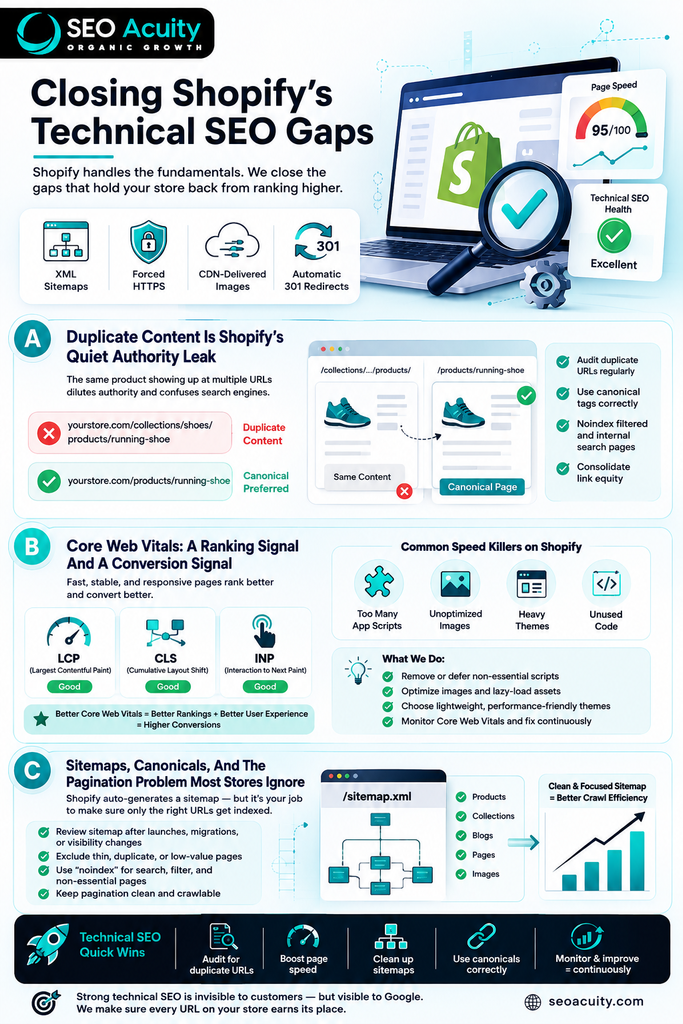
Shopify’s technical SEO is strong out of the box. XML sitemaps, forced HTTPS, CDN-delivered images, and automatic 301 redirects when a URL handle changes are all standard. The platform covers the fundamentals.
What it doesn’t prevent are the structural issues that accumulate as a store grows — duplicate content from filter parameters, page-speed degradation from accumulated app scripts, and sitemap bloat from pages that should be noindexed.
A. Avoid Duplicating Content That Causes A Quiet Authority Leak
One of the most documented duplication issues when learning how to do SEO on Shopify is the product-in-collection URL path.
Yourstore.com/products/item-name and yourstore.com/collections/category/products/item-name can serve the same product content across two different URLs. This can create unnecessary duplication and make it harder for search engines to determine which version should receive the strongest ranking signals.
When learning how to SEO Shopify, it’s important to understand how Shopify’s canonical tags help address this issue. Most Shopify themes add a canonical tag pointing to the primary product URL, but implementation can vary by theme and customization.
A proper technical SEO review should verify that canonical tags are correctly implemented and that internal links consistently point to the preferred URL.
If your sitemap submits both URL variants, or external sites link to the collection-prefixed version, you risk splitting link equity across two competing URLs. Audit this with Screaming Frog or Sitebulb: filter for canonical mismatches and confirm your submitted sitemap contains only canonical versions.
Beyond product duplication, watch for sort and filter parameters (?sort_by=price-ascending) that generate new URLs without adding new content.
These should be excluded via robots.txt or control faceted URLs by limiting unnecessary crawlable filter combinations, using consistent canonical tags, managing internal links, and applying noindex when appropriate.
B. Optimize Core Web Vitals
Google’s Core Web Vitals — Largest Contentful Paint (LCP), Cumulative Layout Shift (CLS), and Interaction to Next Paint (INP) — measure how fast your page loads, how stable its layout is, and how quickly it responds to user input.
Core Web Vitals contribute to page experience and can matter when competing pages offer similarly relevant content. They also affect usability and conversion performance, making them commercially important even when their direct ranking impact is limited.
Passing them correlates with meaningful lifts in conversion rate, because the same conditions that make a page rank well also make it easier to buy from.
The most common Shopify culprits for poor Core Web Vitals: third-party app scripts loading synchronously in the <head>, large unoptimised hero images above the fold, and theme code that defers layout-shifting elements (review widgets, sticky announcement bars) without reserving space for them.
Audit using PageSpeed Insights and Google Search Console’s Core Web Vitals report. Address the largest LCP issue first — usually render-blocking scripts or oversized imagery — before moving to layout shift and interactivity.
Check SEO Solutions SEO Acuity Provide For Programmatic SEO
C. Do Not Ignore Sitemaps, Canonical Tags, And The Pagination
Shopify auto-generates a sitemap at /sitemap.xml that includes product, collection, blog, and page URLs. Shopify automatically generates and updates sitemaps containing eligible product, collection, page, blog, and image URLs.
Review your sitemap against your intended index regularly as the store grows. Paginated collection pages (/collections/all?page=2) are a persistent structural gap. Ensure paginated collection pages remain crawlable through standard HTML links and that products beyond the first page are discoverable.
Keep collection copy and internal linking focused primarily on the main collection URL.
The correct approach now is to ensure each paginated URL loads indexable, distinct content, and that your primary collection page holds the strongest internal link equity not distributed evenly across page-two and page-three variants that dilute it.
These structural issues rarely announce themselves; they compound quietly until a ranking drop forces the audit. SEO Acuity‘s SEO audit services exist precisely to catch them before they cost you measurable revenue.
Watch: When To Do SEO And Don’t? Understand which stages of store growth are right for serious SEO investment and when other channels deserve priority first..
Ready to Improve Your Search Engine Rankings?
Accelerate your organic growth and scale your business leads with our data-driven SEO strategies.
Get a Free Quote NOW!4. Image Optimization Delivers Speed, Rankings, And Accessibility In A Single Move
Images can account for 40–70% of total page weight on ecommerce sites. Shopify’s CDN handles much of the technical work by delivering images in WebP format and resizing them responsively, but file names and alt text still require careful optimization. Rename files descriptively.
Avoid keyword stuffing in image metadata. “Blue merino wool crew-neck sweater, front view” is useful and descriptive, while “Buy blue sweater Shopify store best price..” is not.
Consistent product photography, including standardized backgrounds, lighting, and image dimensions, also creates a more professional catalog experience for shoppers and helps search engines and AI systems interpret your products more effectively.
For stores targeting GCC markets, localized Arabic alt text can improve visibility in Arabic-language search results, making Arabic SEO services particularly useful. If your catalog is large, apply small business SEO principles and prioritize your highest-revenue products first rather than optimizing thousands of images at once.
5. Structured Data Turns Standard Listings Into Rich Search Results
Schema markup, specifically JSON-LD structured data, is how you tell search engines what your content means, not just what it says. Shopify themes include basic Product schema by default, but “basic” rarely means complete.
The structured data types most relevant to a Shopify store:
- Product schema: price, availability, SKU, brand, and condition. Enables the price and stock annotations that appear beneath your listing in search results.
- Valid Review and AggregateRating data: can make eligible product pages more understandable to Google and potentially support review enhancements, provided the ratings are genuine, visible on the page, and compliant with Google’s policies.
- BreadcrumbList schema: clarifies your site architecture for crawlers and AI retrieval systems, making entity relationships across your catalogue legible.
- FAQ content: can still improve usability and cover relevant customer questions, but FAQPage markup should not be presented as a route to Google FAQ rich results or People Also Ask placement. Prioritize visible, useful FAQ content and supported product and merchant structured data.
- Organization schema: establishes your brand as a named entity with a logo, contact point, and social profiles. This is foundational for knowledge panel eligibility and AI-system brand recognition.
Shopify’s theme editor doesn’t expose these fields natively for most themes. Use a schema app (Schema App, Rich Snippets & Schema) or a custom Liquid snippet to implement them cleanly. Validate every implementation in Google’s Rich Results Test before pushing live.
Watch: Organic Growth Strategy a practical walkthrough of how organic search becomes your most durable acquisition channel.
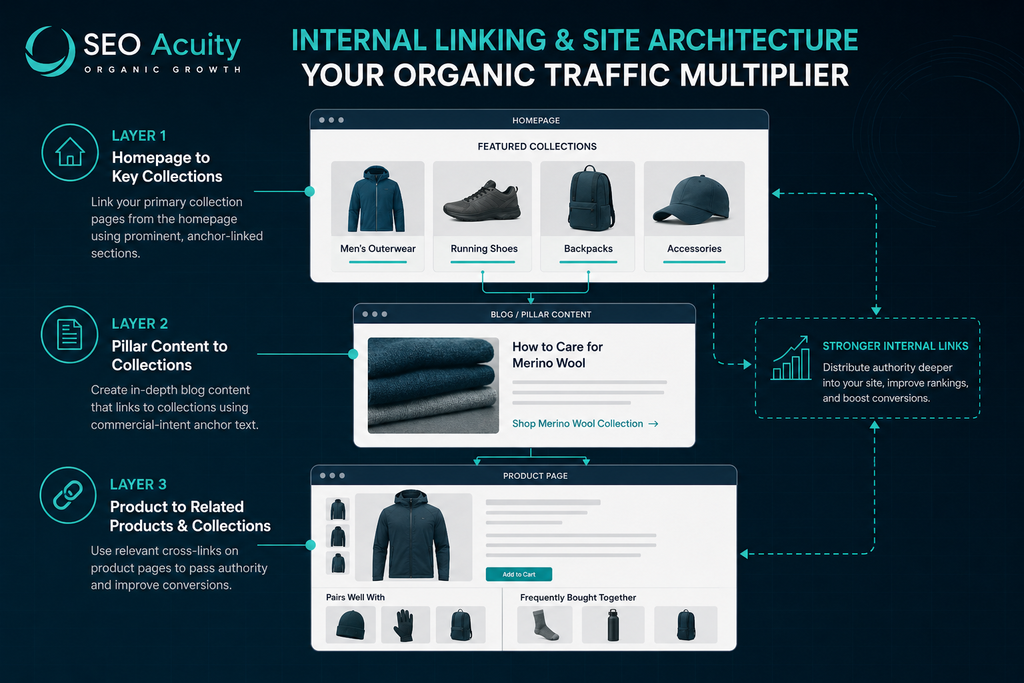
6. Multiply Your Organic Traffic Through The Internal Linking And Site Architecture
Internal linking is the most underused SEO lever in ecommerce. External backlinks get the attention because they’re harder to earn, but internal links are entirely within your control — and a deliberate internal link structure multiplies the ranking power of every page you’ve already built.
Most Shopify stores link internally by accident, through navigation menus, related-product modules, and footer links, rather than by design. The result is that authority accumulates in the header and footer, and the deeper product and collection pages that actually drive revenue receive almost none of it.
- First, ensure your primary collection pages receive direct links from your homepage — not buried in navigation dropdowns, but in prominent anchor-linked sections that carry editorial weight.
- Second, build pillar blog content that links to collection pages using commercial-intent anchor text.
- Third, use product page cross-links strategically: “pairs well with” or “frequently bought together” modules serve both conversion and SEO when the linked pages share keyword and topical relevance.
7. Blog On Shopify To Build The Topical Authority That Converts Into Rankings
A blog that publishes one post per week on loosely related topics builds shallow coverage across many subjects and earns authority in none of them.
A blog that publishes twenty tightly clustered posts around one specific entity, “trail running” or “natural skincare” or “home espresso”, signals deep expertise to crawlers and to AI retrieval systems that are evaluating which content to pull for topic-related queries.
Structure your Shopify blog as a topical cluster, not a content calendar. Identify five to eight core subtopics within your category and build content that covers each angle exhaustively. Every piece should link back to at least one commercial collection page using keyword-relevant anchor text.
Every piece should also cross-link to at least two other blog posts within the same cluster, creating the dense internal network that signals topical depth. Repurpose strategically.
A comprehensive blog post about “how to choose trail running shoes” can become a YouTube video, an FAQ section on your collection page, a Pinterest infographic, and a structured FAQ schema block that feeds AI snippets.
Read more about: organic growth strategy to win AI search
Ready to Improve Your Search Engine Rankings?
Accelerate your organic growth and scale your business leads with our data-driven SEO strategies.
Get a Free Quote NOW!8. Backlinks That Signal Real Authority
For Shopify stores, the highest-leverage backlink sources are: editorial coverage in niche publications relevant to your product category, product round-up features on blogs your buyers actively read, data-driven content that earns citation from industry sources, and supplier or brand partner pages that link to authorised retailers.
Each of these represents a genuine editorial decision by a third party that your product or content deserves a mention which is precisely what a quality backlink signal is supposed to represent. Digital PR is the most scalable version of this.
One piece of data-driven content that earns forty editorial citations from relevant publications outperforms four hundred directory submissions in both ranking impact and durability.
Avoid indiscriminately disavowing links solely because a third-party tool labels them “toxic”. A full what is an SEO audit breaks down the components of a link profile review and what healthy versus harmful link patterns look like in practice — useful reading before you invest in building more links on top of a compromised foundation.
Watch: How AI Search Really Works, RAG, Embeddings, and How to Get Your Content Found
SEO Acuity‘s ecommerce SEO services include a link-profile audit as a standard first step, because building on a clean foundation is the only approach that compounds rather than corrects.
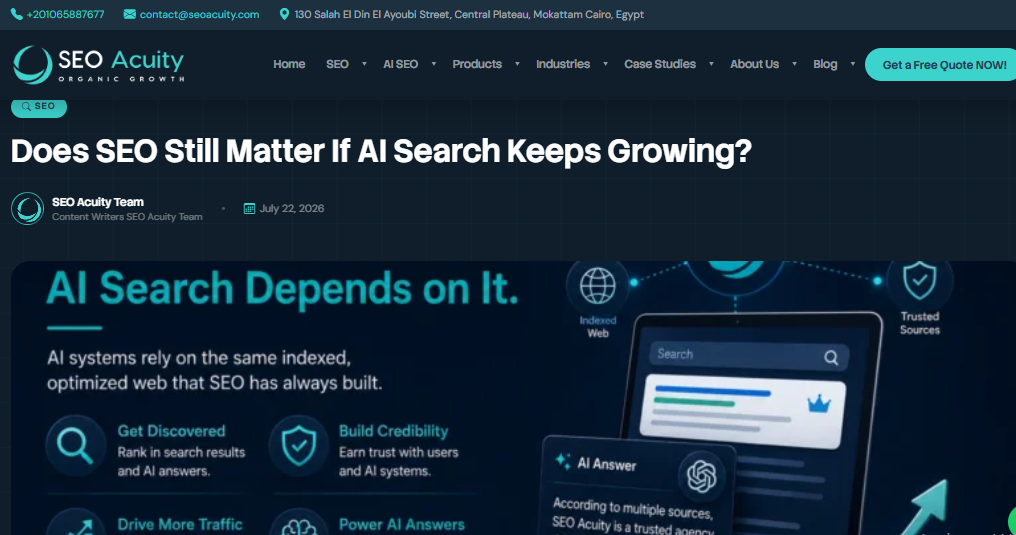
Discover the answer of this question: Does SEO still matter if AI search keeps growing?
9. Prioritize AI Search Optimization as a Mandatory Action for Shopify Stores
AI-powered search, Google’s AI Overviews, ChatGPT Search, Perplexity, and emerging AI shopping surfaces, has shifted the competitive landscape for ecommerce stores at a speed most brands haven’t yet registered.
The AI system retrieves content from multiple sources, evaluates their relevance and credibility, and constructs a response that may cite your store or may not reference it at all. You’re either in the answer or you don’t exist for that query.
The question for Shopify store owners is whether do AI and GEO / AEO replace SEO or complement it. The answer, as practice currently shows, is that AI retrieval rewards the same content quality, topical authority, and entity clarity that strong traditional SEO demands but it weights structured, self-sufficient content even more heavily than keyword-matched page titles.
AI-powered search, Google’s AI Overviews, ChatGPT Search, Perplexity, and emerging AI shopping surfaces, has shifted the competitive landscape for ecommerce stores at a speed most brands haven’t yet registered.
The AI system retrieves content from multiple sources, evaluates their relevance and credibility, and constructs a response that may cite your store or may not reference it at all. You’re either in the answer or you don’t exist for that query.
The structural implications for your Shopify store are specific. Every page that you want to surface in AI responses should answer one question clearly and completely within the first few sentences of each section.
Watch: How to Get Your Content Featured in AI Search, A Step-by-Step Framework for ChatGPT & Gemini
10. Audit Your Store Continuously To Support Its Compounding Growth
The core measurement stack for a Shopify store is not complicated. Google Search Console shows you impressions, click-through rate, average position, and indexing errors and it’s free. Google Analytics 4 connects those organic sessions to revenue, so you can tie SEO activity to commercial outcomes rather than just traffic numbers.
Ahrefs or Semrush adds competitive visibility: who’s gaining positions you’ve held, which new keywords are moving, and where your backlink profile stands relative to competitors.
This takes under two hours per month and catches the majority of issues before they become ranking drops. For stores that have passed a certain scale — multiple product lines, significant organic traffic, a team making site changes regularly — the monthly check-in is not enough.
A formal quarterly SEO audit, either in-house or via an external partner, is the mechanism that identifies structural drift before it costs you positions you’ve spent months earning.
Knowing how to hire an SEO expert, what credentials to look for, what questions to ask, and what deliverables to expect — makes that investment far more likely to return what you pay for it.
Watch: How to Double Your SEO & AI Search Performance with 9 Off-Site Layers
Ready to Improve Your Search Engine Rankings?
Accelerate your organic growth and scale your business leads with our data-driven SEO strategies.
Get a Free Quote NOW!Why Shopify Brands Trust SEO Acuity With Their Organic Growth?
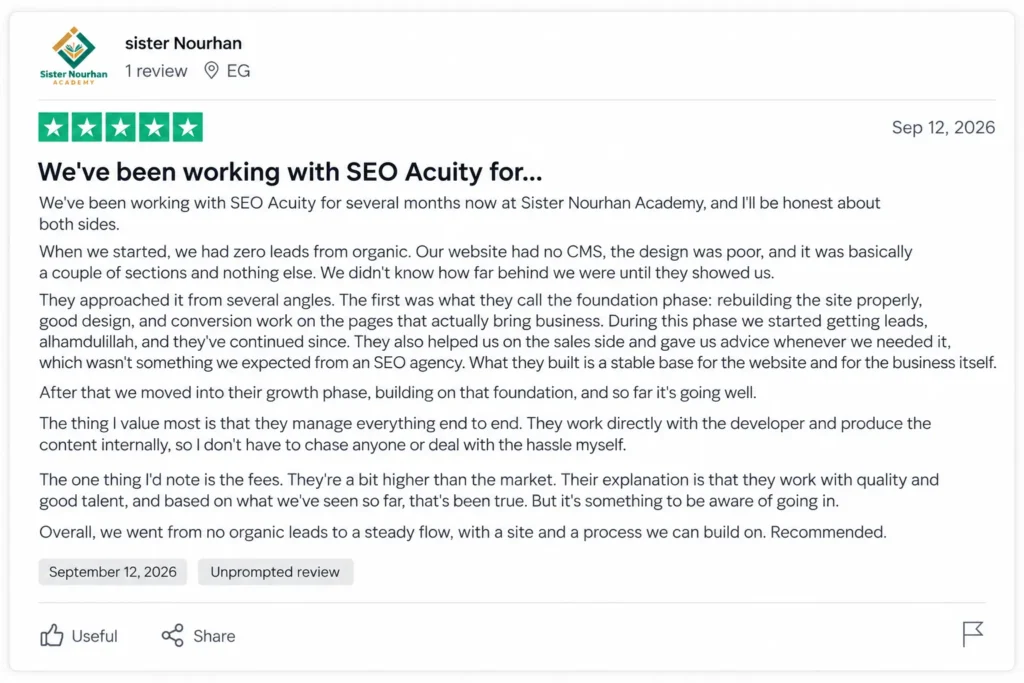
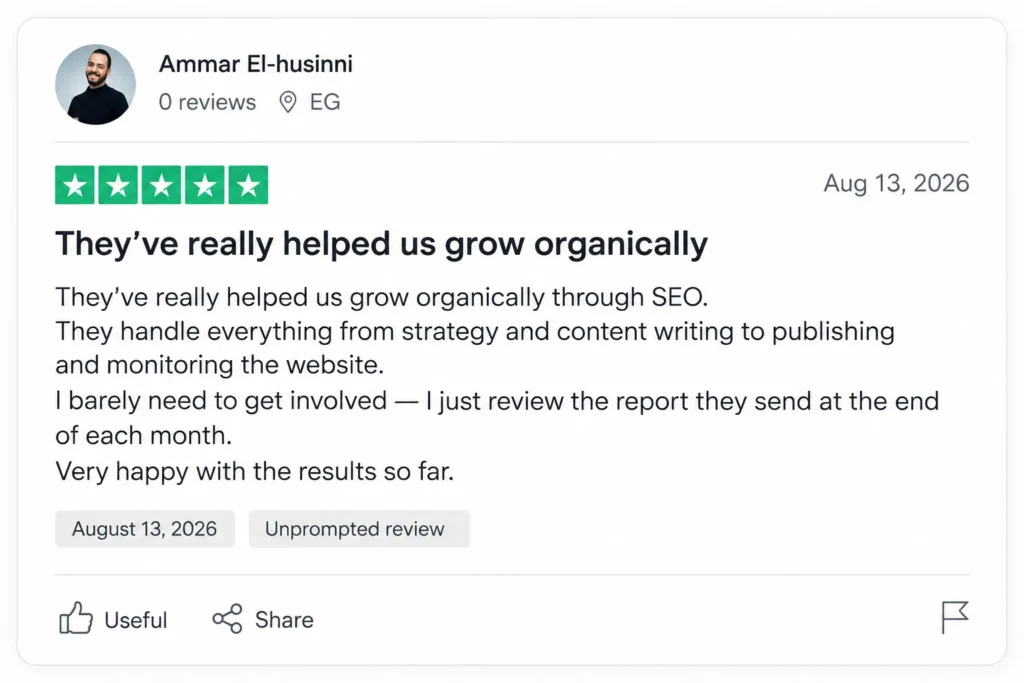
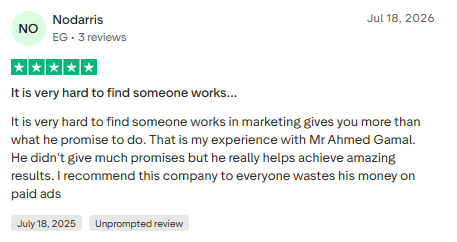
SEO Acuity is an Organic Growth Architecture firm, not a traditional SEO agency.
The distinction is intentional. Where most agencies execute tactics and report on rankings, SEO Acuity engineers the structural foundation that makes organic traffic a compounding, defensible business asset — one that keeps paying back long after the work is done.
For Shopify stores specifically, that means building the keyword architecture, technical health, content infrastructure, and authority signals that allow a store to own its category in search rather than compete for individual positions.
SEO Acuity works across English and Arabic markets and has developed the GCC Market Expansion SEO™ methodology for brands entering or scaling in MENA.
The firm’s Organic Growth Foundation™ and Organic Growth Retainer™ engagements are built around the principle that ranking is a means and revenue is the measure — which is why every engagement is structured around commercial outcomes, not vanity metrics.
If you’re ready to move from execution to architecture, contact SEO Acuity to discuss what organic growth looks like as a strategic investment for your store.
Conclusion
Every step in this guide compounds on the one before it. Keyword research only pays back when it informs your on-page optimization.
On-page optimization only holds its gains when the technical foundation underneath it is clean. Structured data amplifies content that’s already well-optimised, it doesn’t rescue content that isn’t.
Backlinks earn authority for pages that already demonstrate it; pointing them at thin content is waste. The common thread is that what is AI SEO, the discipline of optimising content for retrieval by AI systems in addition to traditional search engines, isn’t a separate strategy layered on top of this. It’s the natural evolution of doing all of the above well.
Entity clarity, chunk self-sufficiency, structured headings, high-specificity copy, and topical authority clusters are the same requirements that serve both traditional ranking and AI retrieval. Build for one, and you’re largely building for both. The benefits of AI SEO for businesses extend beyond ranking.
Frequently Asked Questions
How often should I run an SEO audit on my Shopify store?
A basic crawl audit — checking for broken links, indexing errors, and canonical discrepancies — should run monthly. A comprehensive SEO audit covering technical health, content gaps, backlink profile, and keyword position movement is most valuable quarterly or after any significant site change (theme update, URL restructure, product line addition).
How long does it take to see results from Shopify SEO?
On-page changes to existing pages that already have some ranking history typically show movement within four to twelve weeks. New pages targeting competitive keywords take longer — three to six months for initial traction is a realistic expectation in most categories, with meaningful position gains in competitive verticals often taking six to twelve months.
Does Shopify have good built-in SEO?
Yes, for the basics. Shopify handles the technical fundamentals reliably: auto-generated sitemaps, SSL, CDN delivery, WebP image conversion, canonical tags on variant URLs, and automatic 301 redirects when a URL handle changes. For most new stores, these defaults are enough to avoid the worst technical penalties.
What’s the biggest SEO mistake Shopify store owners make?
Treating blog content as a separate initiative from their commercial pages. The most common pattern is a store that publishes blog posts to “get organic traffic,” but never maps that content back to collection pages with deliberate internal links, never builds the topical cluster that signals category authority, and never connects blog performance to revenue.
How does AI search change Shopify SEO strategy?
AI SEO vs traditional SEO isn’t a complete replacement — it’s an evolution of the same underlying principles. Optimising for large language model optimization (LLMO) means structuring content so that AI systems can retrieve individual chunks, identify your brand as an authoritative named entity, and cite you in generated responses.
The content requirements — specificity, entity clarity, self-sufficient paragraphs, clean heading hierarchy — overlap heavily with traditional SEO best practice.
Can I do Shopify SEO myself, or do I need an agency?
Yes, you can handle the fundamentals yourself: product copy, titles, meta descriptions, collection structure, and basic Search Console tracking. An agency pays off once you hit the technical layer (site architecture, duplicate collection and variant URLs, indexing issues, structured data) or link building, where mistakes quietly hold rankings back.