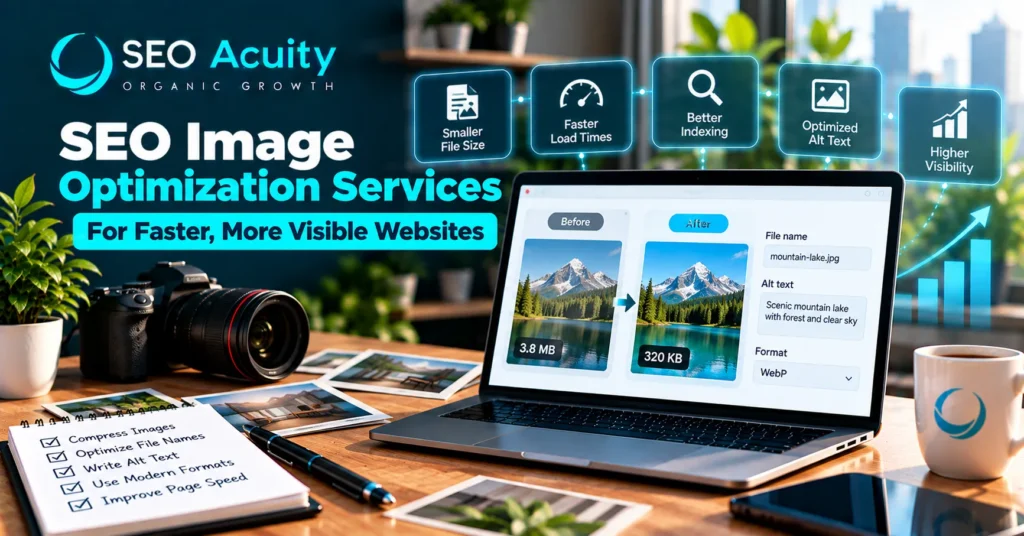
SEO image optimization is the process of preparing website images so search engines can understand, index, and rank them, while keeping page load times fast for visitors.
It is built for business owners, website owners, startups, and marketing teams who want their visual content to support organic search performance rather than slow it down.
What this article covers
● What SEO image optimization is.
● Is SEO image optimization right for your website?
● Problems SEO image optimization solves.
● Service features and deliverables.
● Benefits of SEO image optimization.
● How the service works.
● Why choose SEO Acuity for image SEO.
What Is SEO Image Optimization?
SEO image optimization is the practice of adjusting an image’s technical and descriptive attributes so that search engines can interpret its content and context.
This includes the image format, file size, file name, alt text, dimensions, and placement within the page.
Image optimization SEO addresses two related problems at once: pages that load slowly because of unoptimized images, and images that remain invisible to search engines because they lack descriptive information such as alt text or meaningful file names.
This service is intended for websites where images play a meaningful role in the user experience, such as ecommerce product pages, blogs, and content-heavy service pages.
An image seo optimization engagement typically starts with a review of how images are currently set up, followed by specific, prioritized recommendations.
Depending on the scope agreed with a client, SEO Acuity can provide direct implementation support or hand off clear recommendations for a client’s development or content team to apply.
Image seo optimization is not limited to a single fix. It typically combines several smaller changes, such as adjusting a file format here or rewriting an alt text description there, that together add up to a measurable improvement in how a page loads and how its images are indexed.
Talk to SEO Acuity and find the right fit for your site.
Is SEO Image Optimization Right for Your Website?
This service tends to be a good fit when one or more of the following applies to a website:
- Product, blog, or gallery pages rely heavily on images to communicate information.
- Page speed tools flag large or unoptimized images as an issue.
- Images have generic file names, missing alt text, or inconsistent formatting.
- Little to no traffic is coming from image search despite having relevant visual content.
- A broader SEO effort is underway and images have not yet been reviewed as part of it.
If none of these apply, image optimization may still offer smaller gains, but the impact is usually most noticeable on image-heavy websites where visuals carry a large share of the page weight.
Problems SEO Image Optimization Solves
Even a technically solid page can lose visibility and usability if its images are working against it rather than for it. Here’s a look at the specific problems SEO image optimization is designed to fix.
1. Slow Page Load Times Caused by Unoptimized Images
Large, uncompressed image files are one of the most common reasons a page loads slowly. Slow-loading pages can affect user experience and how a page is evaluated for search.
Image optimization SEO addresses this by reducing file size without materially reducing visual quality, so pages feel faster to visitors on both desktop and mobile connections.
Read also: Can You Do Seo Yourself? A Practical Guide
2. Images That Are Difficult for Search Engines to Understand
Search engines cannot interpret an image the way a person can; they rely on surrounding text, alt text, and file names to understand what an image shows. Without this information, an otherwise relevant image may never appear in image or web search results, even if the page itself ranks well.
3. Generic or Missing Alt Text
Alt text that is missing, blank, or unrelated to the image content limits both accessibility and search visibility. Screen readers depend on alt text to describe images to users with visual impairments, and search engines use the same text to index image content and match it to relevant searches.
4. Images Left Out of Discovery and Indexing
If images are not referenced in an image sitemap or are unintentionally blocked from crawling, they may never be discovered by search engines, regardless of how well they are otherwise optimized. This is a common blind spot on larger or older websites.
5. Inconsistent Formats and Oversized Files Across the Site
Mixing formats inconsistently, or using the same heavy format for every image regardless of its purpose, can add unnecessary weight across a site. Reviewing format choices page by page helps keep load times consistent site-wide.
Read also: Page Experience And Page Speed As Seo Ranking Factors
Read Also: AI SEO vs Traditional SEO – What’s the Difference and Do You Need Both?
Ready to Dominate Search Engine Rankings?
Accelerate your organic growth and scale your business leads with our data-driven SEO strategies.
Get a Free Quote NOW!Service Features and Deliverables
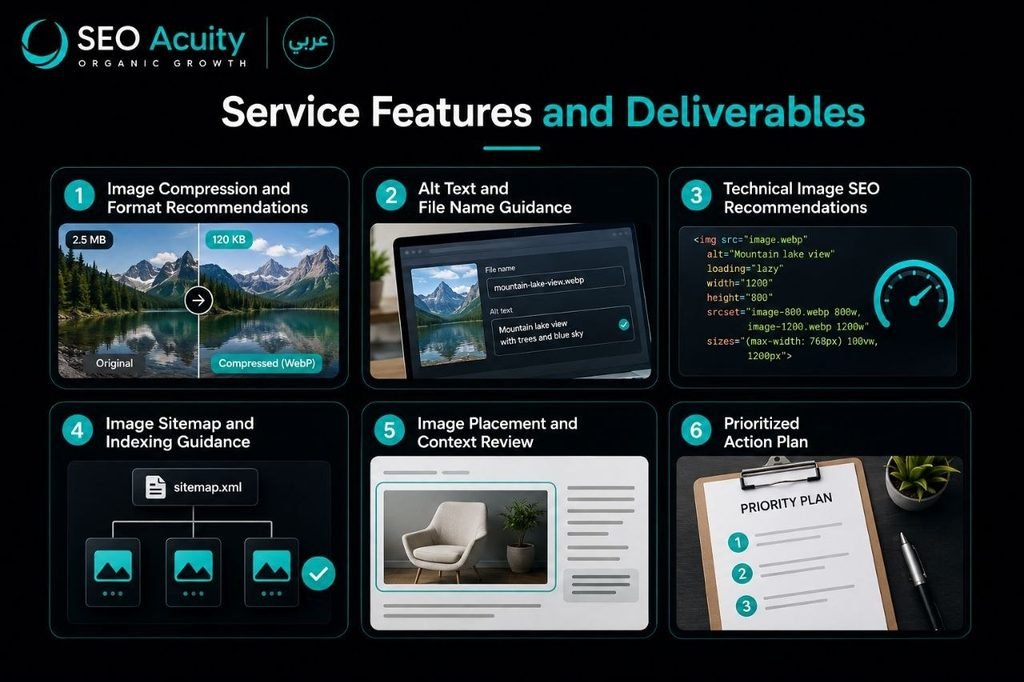
A complete image SEO service goes well beyond compression alone — it covers everything that affects how images load, get understood, and get discovered. Here’s what’s typically included.
1. Image Compression and Format Recommendations
This includes identifying oversized image files and recommending appropriate compression levels and formats, such as WebP or AVIF, to reduce file size while preserving visual quality, so pages stay fast without a visible drop in how images look.
2. Alt Text and File Name Guidance
This deliverable focuses on writing or reviewing alt text and file names so each one accurately describes the image and reflects relevant keywords where it makes sense, rather than relying on generic or repeated descriptions across a site.
Read also: Most Important SEO Ranking Factors
3. Technical Image SEO Recommendations
This covers lazy loading configuration, responsive image markup, and setting explicit width and height attributes to help pages load smoothly and avoid layout shifts as images load.
4. Image Sitemap and Indexing Guidance
Where relevant, this includes recommendations for including images in an XML sitemap and confirming that images are not unintentionally blocked from being crawled and indexed.
5. Image Placement and Context Review
This looks at where images sit relative to related text on the page, since surrounding context helps search engines interpret what an image is showing and why it is relevant to the page.
6. Prioritized Action Plan
Every recommendation is organized into a clear, prioritized list, so a client’s team can see which changes are likely to have the biggest impact on speed and visibility and address those first.
Read Also: Does SEO Still Matter If AI Search Keeps Growing?
Benefits of SEO Image Optimization
When implemented consistently, seo image optimization can support several outcomes:
● Faster-loading pages, which can improve the overall user experience.
● Better opportunities for images to appear in image search results.
● Improved accessibility for visitors using screen readers.
● A clearer, more consistent structure for search engines to interpret image content.
● Support for the broader technical and on-page SEO of a website.
These outcomes tend to build on each other over time. Faster pages support better user engagement, and better-described images give search engines more reasons to surface a page for relevant, image-related searches.
Ready to Dominate Search Engine Rankings?
Accelerate your organic growth and scale your business leads with our data-driven SEO strategies.
Get a Free Quote NOW!How the Service Works
The service follows a clear, structured process — from first audit to hands-on implementation. Here’s how it typically unfolds.
1. Image Audit
The process typically begins with a review of the images across a website’s key pages, looking at file size, format, alt text, file naming, and how images are referenced in the site’s code.
2. Recommendations and Prioritization
Findings are organized into a prioritized list, so the images with the greatest potential impact on speed or visibility are addressed first. Recommendations are documented clearly enough for a client’s own team to act on them if needed.
3. Implementation Support
Depending on the scope agreed upon, SEO Acuity can provide direct implementation support or work alongside a client’s existing development or content team to apply the recommended changes.
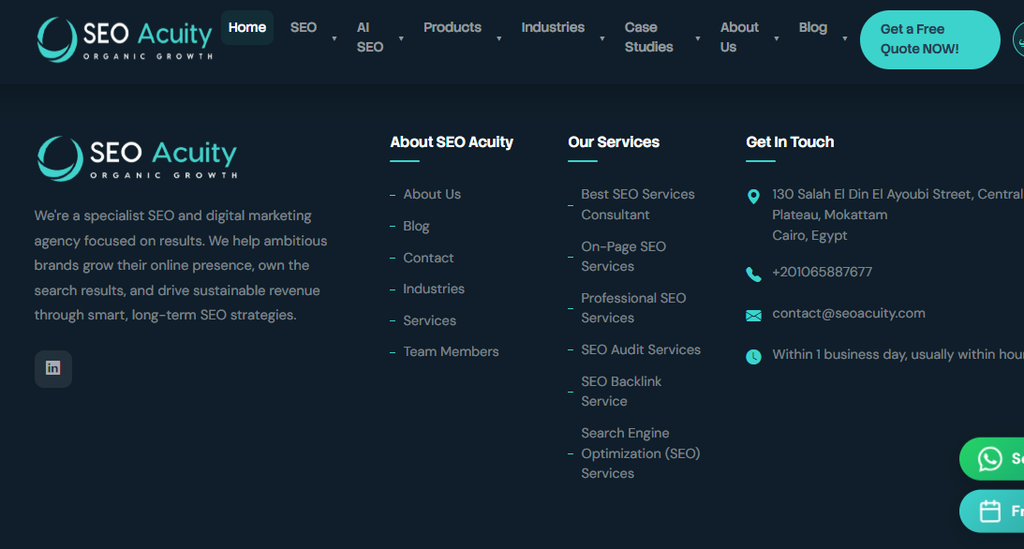
4. Review and Next Steps
Once changes are implemented, results can be reviewed against the original findings, and any remaining opportunities can be scheduled as part of ongoing SEO work.
Why Choose SEO Acuity for Image SEO
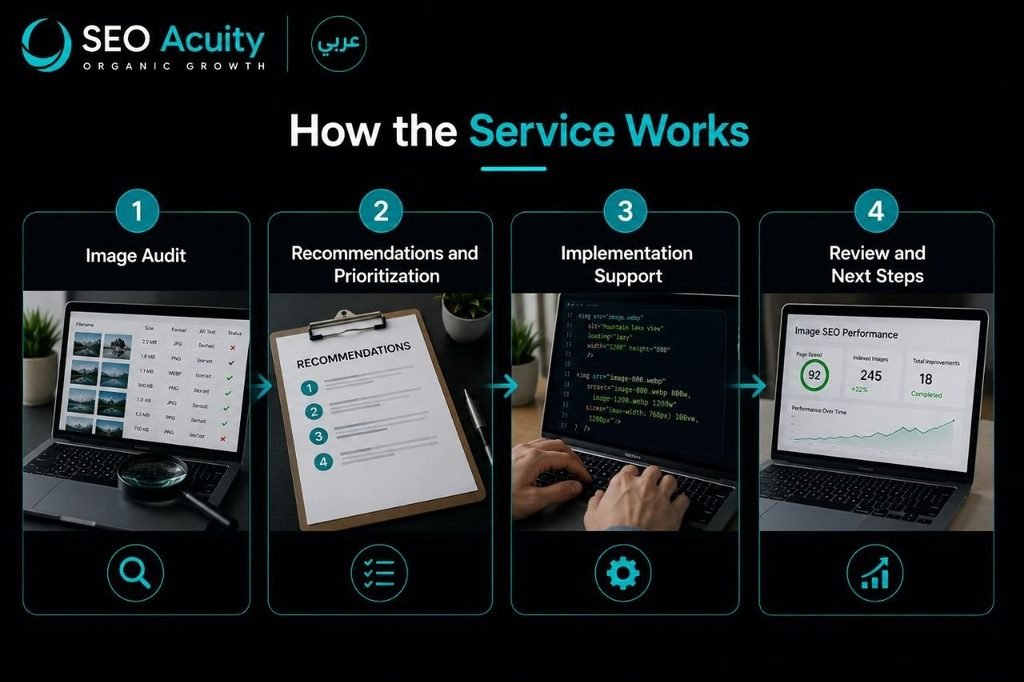
SEO Acuity approaches image optimization as one part of a website’s overall technical and on-page SEO, rather than as an isolated task, so recommendations are made with the page’s broader search performance in mind.
Working with SEO Acuity means recommendations are documented clearly, prioritized by potential impact, and explained in terms a non-technical business owner can understand and act on.
Image seo optimization is treated as one input into a page’s overall search performance, alongside content, site structure, and other technical SEO elements, rather than as a standalone checklist disconnected from the rest of the page.
If you are unsure whether your current images are helping or hurting your search performance, a Free SEO Quote is a low-commitment way to get a clearer picture.
Ready to Get More From Your Website’s Images?
Unoptimized images can quietly slow down your pages and limit how much of your visual content search engines ever see.
Requesting a Free SEO Quote is the first step toward understanding what is currently holding your images back and what can realistically be improved.
Request a Free SEO Quote from SEO Acuity to get a clearer picture of what an SEO marketing strategy could look like for your website, based on where it stands today.
Conclusion
SEO image optimization covers the technical and descriptive details that determine whether your images load quickly and can be understood by search engines.
From file format and compression to alt text, file naming, and indexing, each element plays a role in how your pages perform.
Addressing these details with a structured approach can support both user experience and search visibility over time.
Frequently Asked Questions
Who is SEO image optimization for?
It is for business owners, website owners, and marketing teams whose websites rely on images, such as ecommerce stores, blogs, and content-driven service pages, and who want those images to load faster and be more visible in search.
What is included in an image SEO optimization review?
A review typically covers image file sizes, formats, compression opportunities, alt text, file naming, lazy loading, and how images are referenced in the site’s code and sitemap.
Does image optimization guarantee higher rankings?
No single tactic, including image optimization, can guarantee specific rankings. It can support a website’s overall technical and on-page SEO, but results depend on many additional factors.
Will optimizing my images affect how they look on the site?
The goal is to reduce file size and improve technical setup without a visible drop in image quality, using formats and compression levels chosen to preserve how the image appears to visitors.
Can SEO Acuity implement the changes directly?
Depending on the scope agreed upon, SEO Acuity can provide direct implementation support or share clear recommendations for a client’s own development or content team to apply.
How long does image optimization take?
Timelines vary based on the number of pages and images involved, and the scope agreed upon. A prioritized approach means the highest-impact changes can often be addressed before the rest of the site is reviewed.
Does image optimization work on its own, without other SEO work?
It can improve page speed and image discoverability on its own, but it tends to be most effective as part of a broader on-page and technical SEO effort rather than an isolated, one-time task.