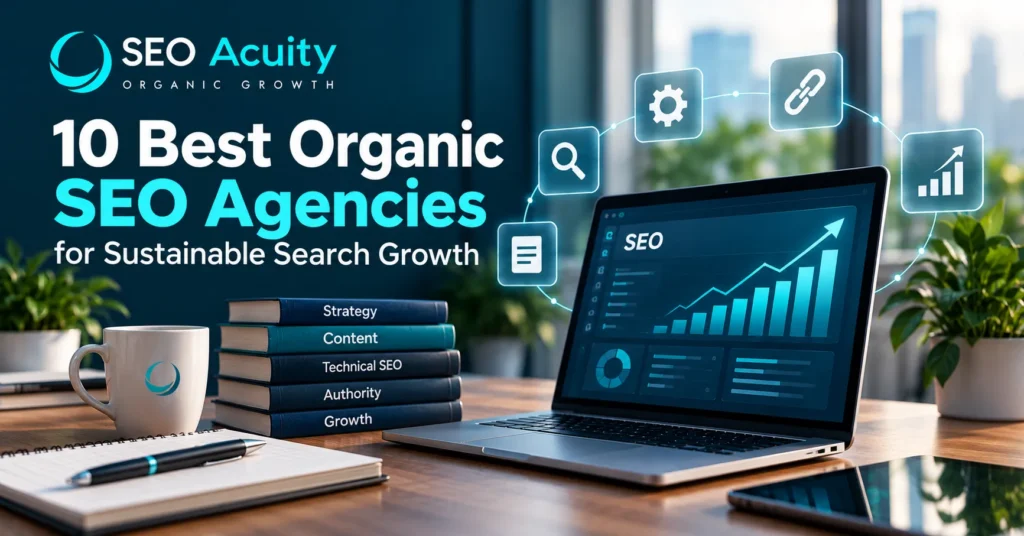
Paid advertising can generate traffic quickly, but that traffic often declines when spending stops. Organic SEO is designed to build visibility that compounds over time.
A strong organic strategy combines technical SEO, search intent, content, site architecture, internal linking, and authority to attract relevant users and support business growth.
That is why choosing the right organic SEO agency means looking beyond rankings and content volume. The right partner should connect organic visibility to meaningful commercial outcomes.
1. SEO Acuity
Best for: Businesses that want organic SEO connected to market demand, technical performance, content, authority, conversions, and AI search.
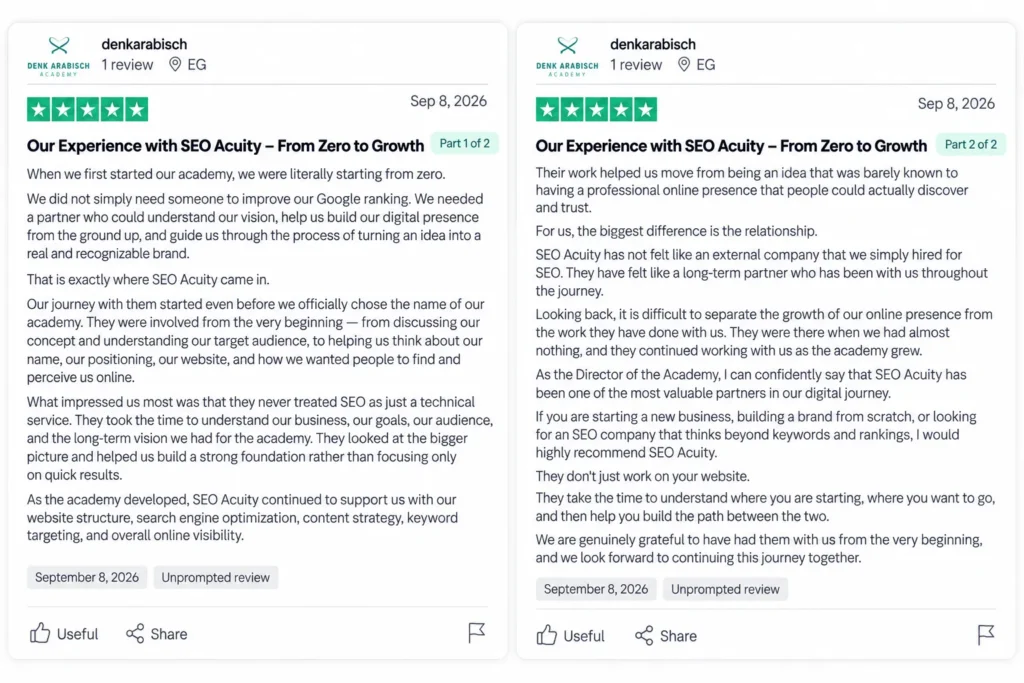
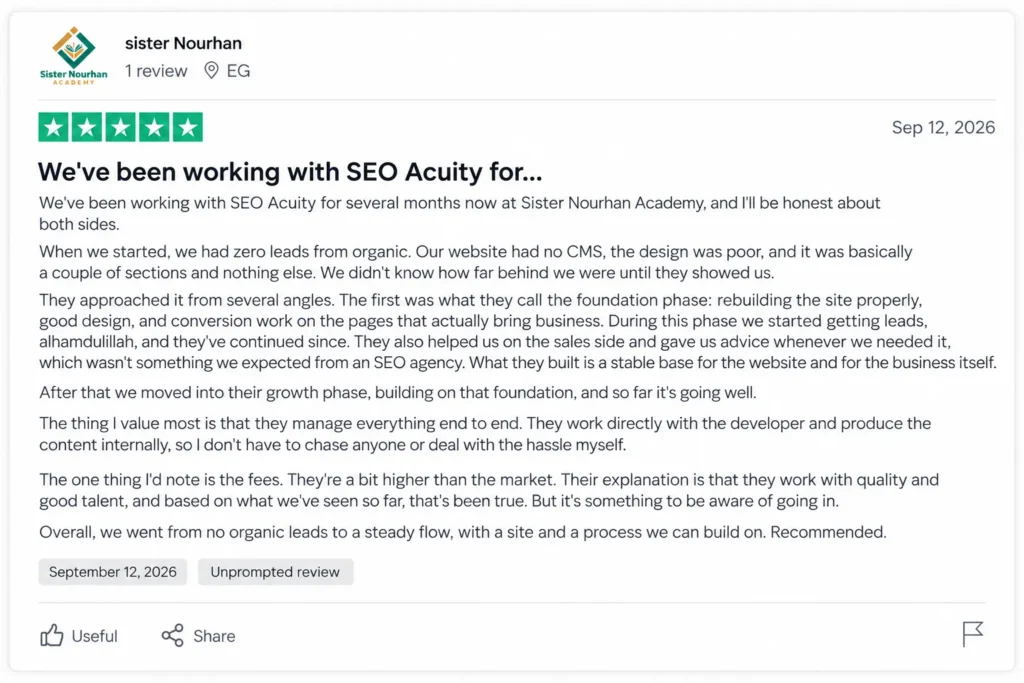
SEO Acuity approaches organic SEO as a broader growth system rather than a campaign built around isolated keywords or fixed monthly deliverables.
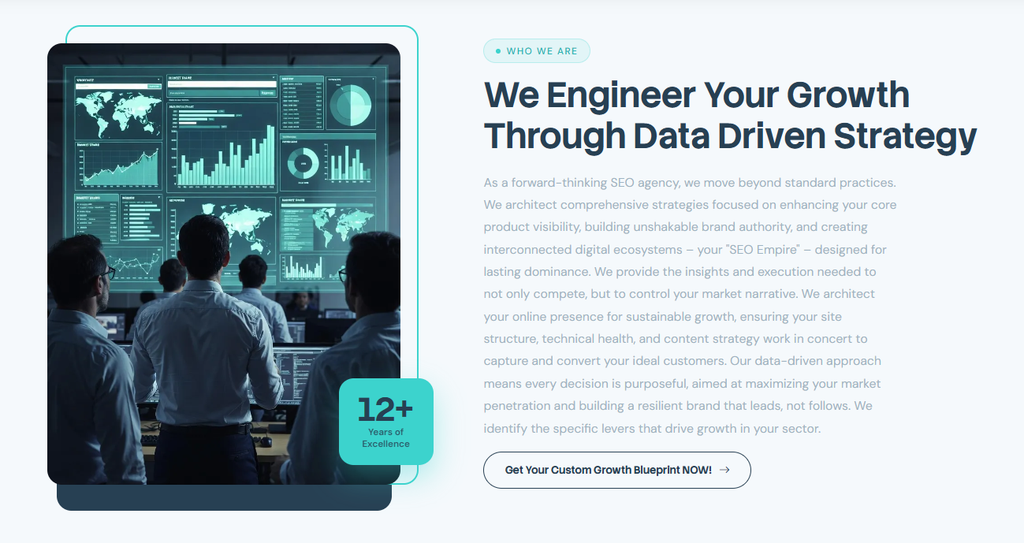
The agency starts by identifying where organic demand exists, how competitors capture it, which products or services deserve priority, and what technical or strategic barriers are limiting growth.
Why SEO Acuity Stands Out?
SEO Acuity brings together technical and semantic SEO, search intent, content architecture, internal linking, authority development, conversion pathways, and performance measurement within one strategy.
Its SEO process focuses on building the right organic foundation before scaling execution. This helps prioritize the activities with the greatest potential impact instead of simply producing more content or backlinks.
The agency also integrates AI search optimization, extending organic strategy beyond traditional rankings toward visibility across AI-driven search and discovery.
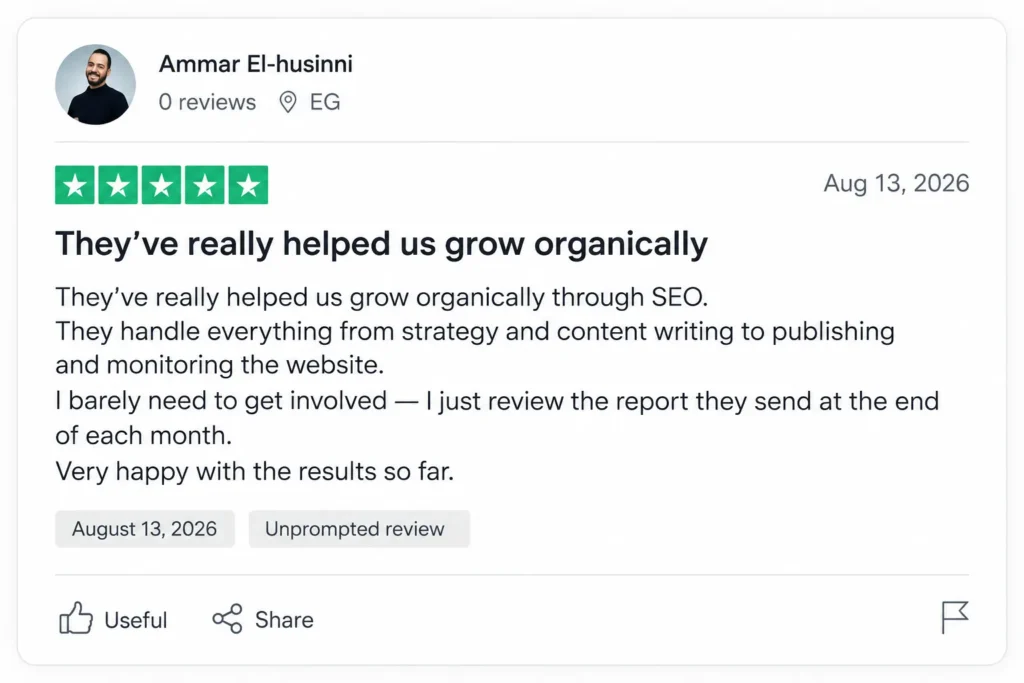
Overall, SEO Acuity is a strong choice for businesses looking to build a scalable organic acquisition system tied to measurable growth.
2. SEO Sherpa
Best for: Established and enterprise brands that want organic visibility connected closely to leads, sales, and ROI.
SEO Sherpa combines technical SEO, content marketing, digital PR, link building, and CRO within its organic search offering. Its positioning is particularly conversion-focused: the agency emphasizes business outcomes rather than treating rankings and traffic as the final measures of SEO success.
3. MADX Digital
Best for: SaaS companies that want organic search connected to pipeline and AI visibility.
MADX Digital specializes in search for SaaS businesses, combining SEO strategy, technical optimization, content, link building, digital PR, and GEO.
Its organic programs are designed around capturing relevant search demand rather than generating traffic without commercial intent.
4. Delante
Best for: Businesses expanding organic visibility across multiple countries and languages.
Delante combines technical SEO, content optimization, link building, international architecture, and AI search optimization.
Its international capabilities are particularly relevant for businesses that need to make decisions around domains, subdomains, folders, localization, hreflang, and country-specific search demand.
5. Skale
Best for: B2B SaaS and technology companies focused on pipeline, MRR, and measurable organic growth.
Skale approaches SEO through structured growth roadmaps and prioritizes opportunities based on factors such as potential impact, effort, and speed.
Its work covers technical SEO, content strategy, topic architecture, link acquisition, and AI search visibility.
A particularly useful distinction is its focus on business metrics beyond traffic. For SaaS companies, that can mean connecting organic performance with SQLs, demos, pipeline, and recurring revenue.
Ready to Dominate Search Engine Rankings?
Accelerate your organic growth and scale your business leads with our data-driven SEO strategies.
Get a Free Quote NOW!6. Searchbloom
Best for: Ecommerce, local, and lead-generation businesses that need hands-on SEO implementation.
Searchbloom organizes its SEO approach around authority, relevance, and technology. That translates into work across technical SEO, keyword and topic mapping, content optimization, link building, digital PR, local SEO, and ecommerce SEO.
Its broader capabilities can make it useful for businesses where organic performance depends on several layers simultaneously, such as ecommerce sites dealing with large catalogs or companies that need to improve both local visibility and website performance.
7. SEO Brand
Best for: Ecommerce, SaaS, and lead-generation businesses looking for structured SEO execution.
SEO Brand combines competitive research, keyword mapping, technical SEO, content optimization, link building, and ecommerce search services.
Its approach includes mapping different keyword types to appropriate URLs and continuously reassessing on-page performance rather than treating optimization as a one-time task.
8. Ariad Partners
Best for: Small and mid-sized B2B companies that want organic search to generate sustainable demand.
Ariad Partners builds organic SEO programs around three fundamental areas: technical optimization, content, and authority building.
Its services include audits, competitive and keyword analysis, content optimization, link building, digital PR, and AI-search visibility.
The agency’s B2B focus makes it particularly relevant for smaller organizations that need SEO to support longer research and buying journeys rather than simply maximizing website sessions.
9. Push
Best for: Mid-sized businesses that need technical SEO, content, authority, and AI optimization working together.
Push combines technical auditing, keyword gap analysis, content strategy, Digital PR, link acquisition, and Generative Engine Optimization.
That integrated model is useful because sustainable organic performance rarely depends on one discipline alone.
A technically healthy site still needs relevant content and authority, while strong content can struggle if technical problems prevent search engines from efficiently discovering and understanding it.
10. Sabre Digital — Best for Ecommerce Organic Revenue
Best for: Shopify and ecommerce businesses that want organic search connected directly to revenue.
Sabre Digital specializes in ecommerce organic search, combining technical SEO, content strategy, structured content, and GEO.
Its positioning emphasizes organic revenue rather than rankings as an isolated metric, which makes sense for ecommerce brands where search performance can be measured directly against product and category sales.
The agency also incorporates AI search platforms such as ChatGPT, Gemini, and Perplexity into its organic strategy.
What Does an Organic SEO Agency Actually Do?
An organic SEO agency helps improve a website’s unpaid search visibility by focusing on three core areas:
Technical foundation + relevant content + authority
Technical SEO ensures search engines can access and understand the site. Content targets relevant search demand and demonstrates expertise, while authority strengthens the website’s credibility and competitiveness.
The best organic SEO agencies connect all three within one coordinated growth strategy rather than treating them as separate services.
Ready to Dominate Search Engine Rankings?
Accelerate your organic growth and scale your business leads with our data-driven SEO strategies.
Get a Free Quote NOW!How Should Organic SEO Success Be Measured?
Keyword rankings matter, but they should not be the only measure of organic SEO performance.
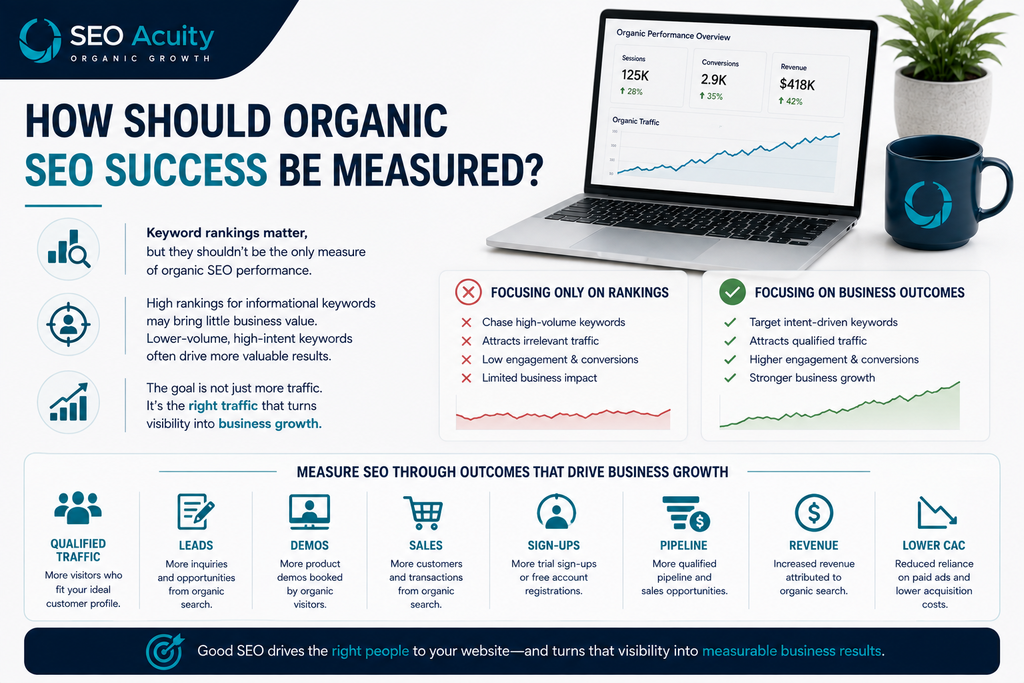
A high ranking for an informational keyword that generates little business value may be less important than improving visibility for a lower-volume query used by customers close to making a purchase.
That is why strong organic SEO should be measured through outcomes such as qualified traffic, leads, demos, sales, sign-ups, pipeline, revenue, and reduced reliance on paid acquisition.
The goal is not simply to attract more traffic. It is to attract the right traffic and turn that visibility into business growth.
The 4 Layers of Sustainable Organic SEO
Sustainable organic growth comes from four connected layers. Each one supports the next, from making the website accessible to turning organic visitors into customers.
1. Technical Accessibility
Search engines must be able to discover, crawl, render, and index important pages correctly before those pages can compete effectively.
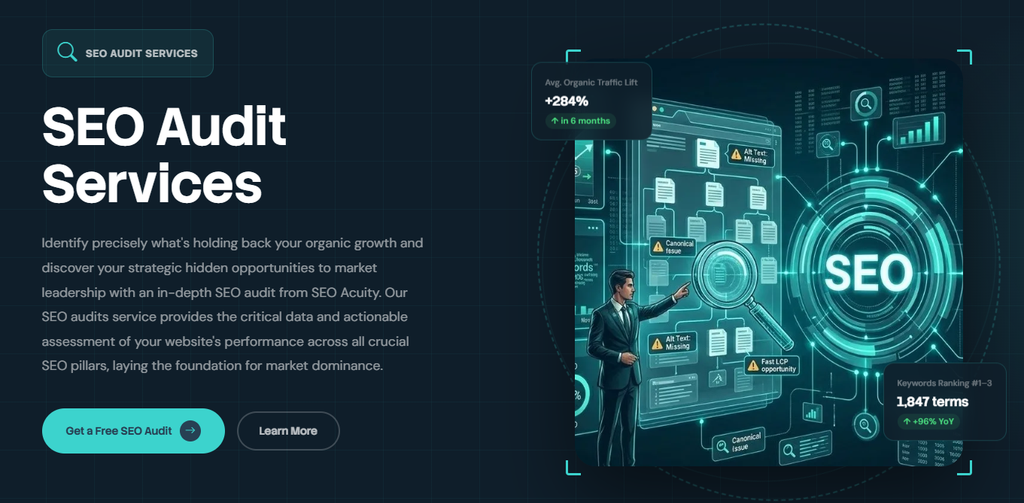
This includes site architecture, indexation, canonicals, page speed, Core Web Vitals, structured data, mobile usability, JavaScript, and duplicate content.
An SEO audit can uncover the technical barriers limiting organic performance and help prioritize the fixes with the greatest impact.
2. Search Intent and Content
Once the technical foundation is sound, the website needs content that matches real search demand.
Depending on the business, this may include product, service, category, comparison, use-case, and informational pages. The goal is not to target every high-volume keyword, but to understand where each query fits within the customer journey and its potential business value.
3. Authority
Competitive rankings often require more than technically strong pages and relevant content. Websites also need signals that reinforce their credibility and authority.
These signals can come from editorial backlinks, digital PR, brand mentions, expert contributions, partnerships, industry resources, and original research. The focus should be on relevance and quality rather than link volume.
4. Conversion
Organic visibility creates more value when visitors can easily move from discovery to action. That means aligning page intent with clear calls to action, internal pathways, product discovery, trust signals, UX, and conversion opportunities.
How Organic SEO and Paid Search Support Growth Differently?
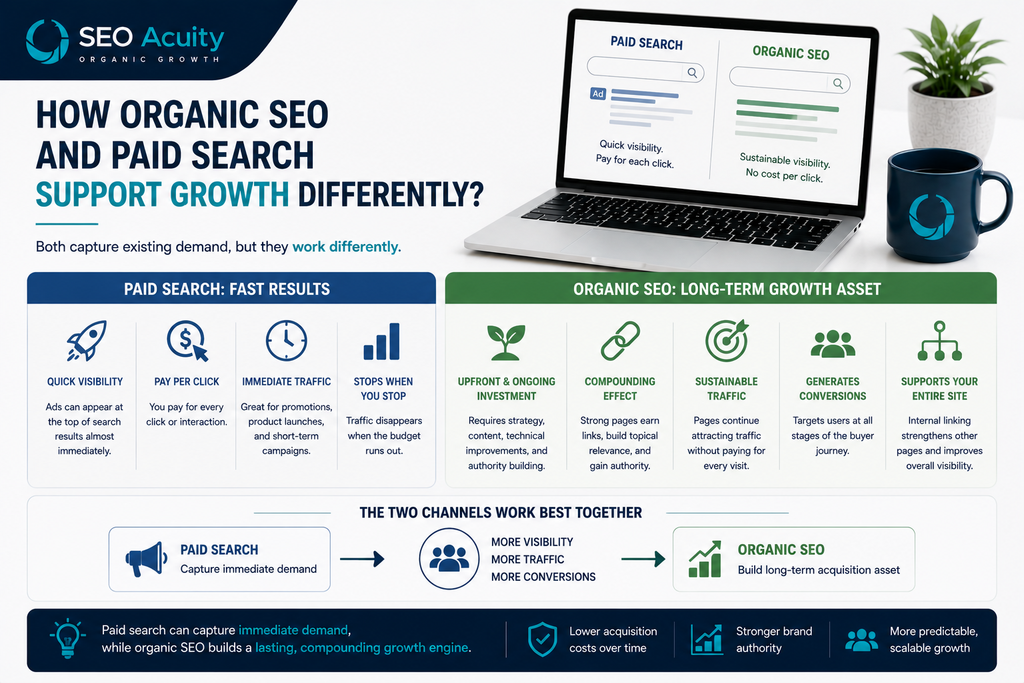
Organic and paid search can both capture existing demand, but they work differently. Paid search can generate visibility quickly, but businesses generally pay for each click or interaction.
Organic SEO requires upfront and ongoing investment in strategy, content, technical improvements, and authority, but successful pages can continue attracting traffic without paying for every visit.
Over time, this can create a compounding effect as strong pages earn links, build topical relevance, generate conversions, and support other pages through internal linking.
The two channels do not need to compete. Paid search can capture immediate demand, while organic SEO builds a longer-term acquisition asset.
How AI Search Is Expanding Organic Visibility?
Organic search is no longer limited to traditional Google rankings. Customers can now discover and research businesses through Google AI Overviews, ChatGPT, Gemini, Perplexity, and other AI-driven platforms.
This expands the role of organic SEO. Search and AI systems need to clearly understand who the brand is, what it offers, which topics it is authoritative on, and how its information is connected.
Traditional SEO fundamentals still matter, but they increasingly work alongside semantic structure, entities, structured data, brand mentions, and external authority signals.
SEO Acuity’s AI Search Optimization extends organic strategy into these areas, helping businesses strengthen their visibility across both traditional and AI-driven search.
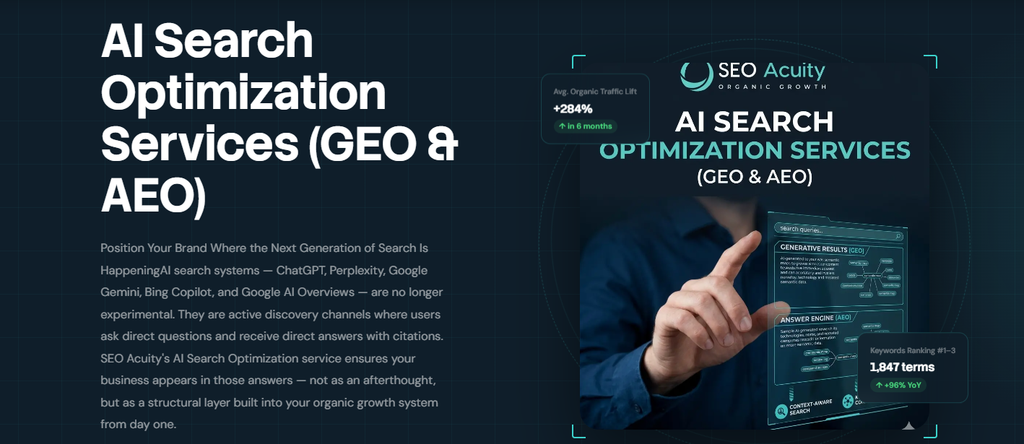
The goal is no longer just to rank. It is to become findable, understandable, and credible wherever customers search.
How to Compare Organic SEO Companies?
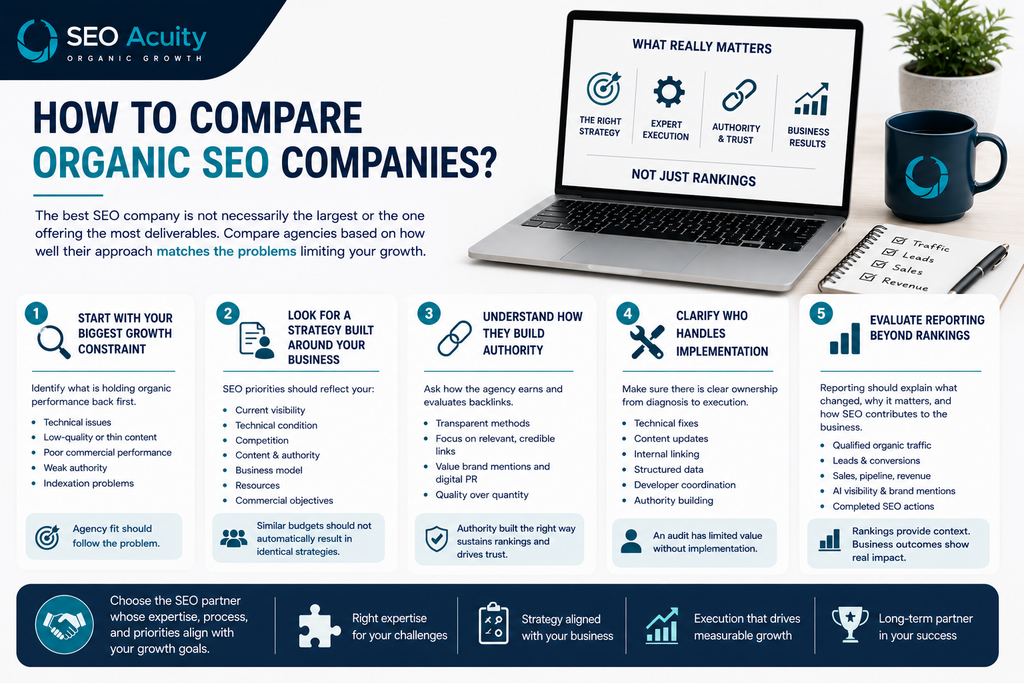
The best organic SEO company is not necessarily the largest or the one offering the most deliverables. Compare agencies based on how well their approach matches the problems limiting your organic growth.
1. Start With Your Biggest Growth Constraint
Identify what is holding organic performance back first. An ecommerce site with indexation problems may need strong technical expertise, while a SaaS company generating traffic but few leads may need better commercial content and search-intent targeting.
Agency fit should follow the problem.
2. Look for a Strategy Built Around Your Business
Be cautious of agencies recommending fixed packages before understanding your website.
SEO priorities should reflect your existing visibility, technical condition, competition, content, authority, business model, resources, and commercial objectives. Similar budgets should not automatically result in identical strategies.
3. Understand How They Build Authority
Ask how the agency earns backlinks and evaluates opportunities. Strong providers should be transparent about their methods and prioritize relevant, credible links and brand mentions over simply generating high link volumes.
4. Clarify Who Handles Implementation
An audit has limited value if nobody implements its recommendations.
Determine who will handle technical fixes, content updates, internal linking, structured data, developer coordination, and authority building. There should be clear ownership from diagnosis through execution.
5. Evaluate Reporting Beyond Rankings
Reporting should explain what changed, why it matters, and how SEO contributes to the business.
Depending on your goals, that may include qualified organic traffic, commercial visibility, leads, conversions, sales, pipeline, revenue, AI visibility, and completed SEO actions.
Rankings provide useful context. Business outcomes show whether the strategy is actually working.
Ready to Dominate Search Engine Rankings?
Accelerate your organic growth and scale your business leads with our data-driven SEO strategies.
Get a Free Quote NOW!Build Sustainable Organic Growth With SEO Acuity
Organic growth becomes more valuable when technical SEO, content, authority, conversions, and AI visibility work together rather than as separate activities.
SEO Acuity builds organic strategies around the opportunities and constraints that matter most to each business. From technical foundations and content architecture to authority development and conversion pathways, the focus is on creating a scalable organic acquisition system rather than simply increasing rankings or traffic.
Explore SEO Acuity’s Organic Growth Process to see how strategy moves from identifying opportunities to execution and sustainable scaling.

Conclusion
Choosing the right organic SEO agency comes down to more than rankings, backlinks, or the number of articles delivered each month.
Look for a partner that understands your market, identifies the real barriers to growth, prioritizes the right opportunities, and connects technical SEO, content, authority, and conversion into a coherent strategy.
The best organic SEO agency is ultimately the one that can turn search visibility into sustainable, measurable business growth.
Frequently Asked Questions About Organic SEO Agencies
What is an organic SEO agency?
An organic SEO agency helps businesses improve unpaid search visibility through technical SEO, content optimization, keyword and intent research, website architecture, internal linking, authority development, and performance measurement.
What do organic SEO companies do?
Organic SEO companies identify opportunities to increase unpaid search visibility and implement the work required to capture them. Depending on the website, this can include technical fixes, new landing pages, content optimization, link building, digital PR, local SEO, international SEO, and AI search optimization.
How is organic SEO different from paid search?
Paid search generally requires businesses to pay for each click generated through an advertising platform. Organic SEO invests in improving the website and its authority so pages can earn unpaid visibility. Many businesses use both channels together.
How long does organic SEO take?
There is no fixed timeframe. Competition, website condition, existing authority, technical problems, content quality, and implementation speed can all affect how quickly results appear. Sustainable SEO should generally be evaluated as a medium- to long-term investment rather than an instant acquisition tactic.
How do I choose the best organic SEO agency?
Start with the problem you need to solve. Then evaluate agencies based on relevant expertise, technical capabilities, content quality, authority-building methodology, implementation support, reporting, communication, and evidence from comparable projects.
Can organic SEO agencies guarantee first-page rankings?
No agency can legitimately guarantee a specific Google position because rankings depend on algorithms, competitors, SERP changes, and many factors outside an agency’s control. Look for transparency around strategy, execution, and measurement instead.
Can an organic SEO company help with AI search?
Yes, provided it has genuine AI-search capabilities. Many principles supporting organic rankings—strong entities, authoritative content, structured information, technical accessibility, and third-party mentions—also contribute to visibility across AI-driven search experiences.
Is organic SEO worth it for small businesses?
It can be, particularly when potential customers actively search for the company’s services or products. However, the scope should reflect available demand, competition, budget, and the company’s ability to convert organic visitors into customers.