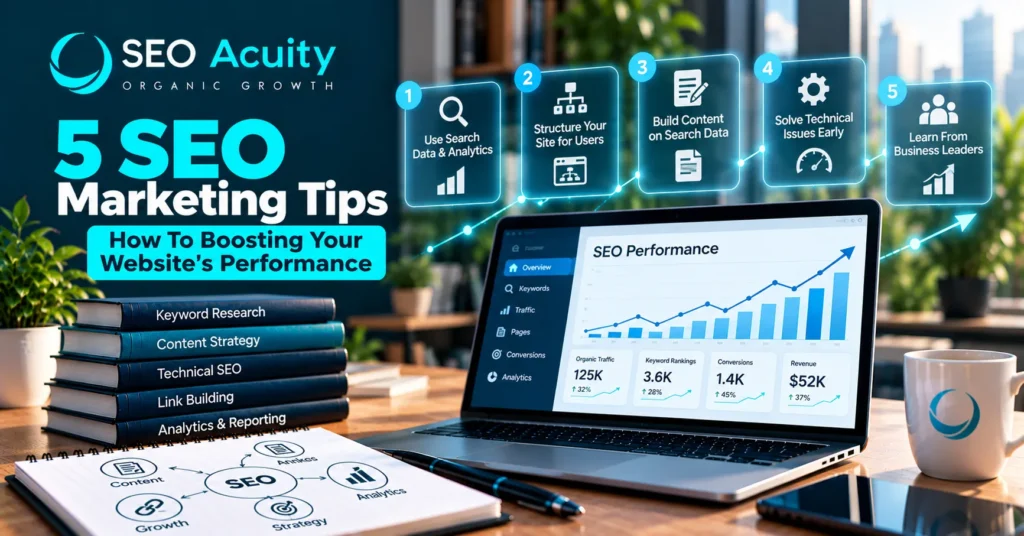
A strong digital marketing strategy today depends on a careful balance between search data, a clear understanding of customer behavior, and consistent execution.
This article walks through the most important SEO marketing tips for building a successful e-commerce website, reaching senior executives and decision-makers effectively, improving local search visibility, and increasing overall sales.
1. Successful E-Commerce Websites Rely on Search Data and Analytics
Successful e-commerce companies use search data and analytics to shape marketing strategies that are centered on customers and content.
They study search queries, phrases, and keywords carefully to understand exactly what people are looking for on Google.
Interestingly, many e-commerce websites are still built without paying attention to search data at all. By examining search engine data, businesses can identify which products are in high demand and which are not, simply by analyzing how people search.
Getting this right requires collecting keyword data alongside sales figures and conversion rate data from the business’s own website. When these are combined, it becomes much easier to forecast financial outcomes even before an SEO strategy is implemented.
Analyzing the search phrases customers use also helps estimate a brand’s overall share of the market on Google. Marketers can compare themselves against competitors using research and analytics tools such as Semrush, which supports competitor analysis and conversion rate benchmarking.
When this data is combined with historical sales figures and profit margins, it creates a realistic picture of where a company stands, how successful it has been, and where the real opportunities lie to grow market share.
Request a Free SEO Quote to get a sense of how these strategies could apply to your business.
In e-commerce, content is king. Experts and consultants are often brought in to help create and analyze this content, and its value is measured not only by the time customers spend browsing the site, but by the actual sales and revenue it generates.
Read also: How To Improve Seo Ranking – A Complete Guide
2. Information Architecture: Structuring Your Site Around Customer Needs
The way information is organized and presented on a website must be built around what customers actually need. A successful e-commerce site is effective and easy to navigate because it focuses on what visitors are actually looking for.
Search and analytics tools make it possible to uncover user intent directly. Smart marketers start by identifying the most common questions and problems customers are searching for solutions to.
Addressing these questions clearly and quickly gives visitors a better experience, because it shows them the business understands and cares about their needs.
3. Content Strategy Should Be Built on Search Data
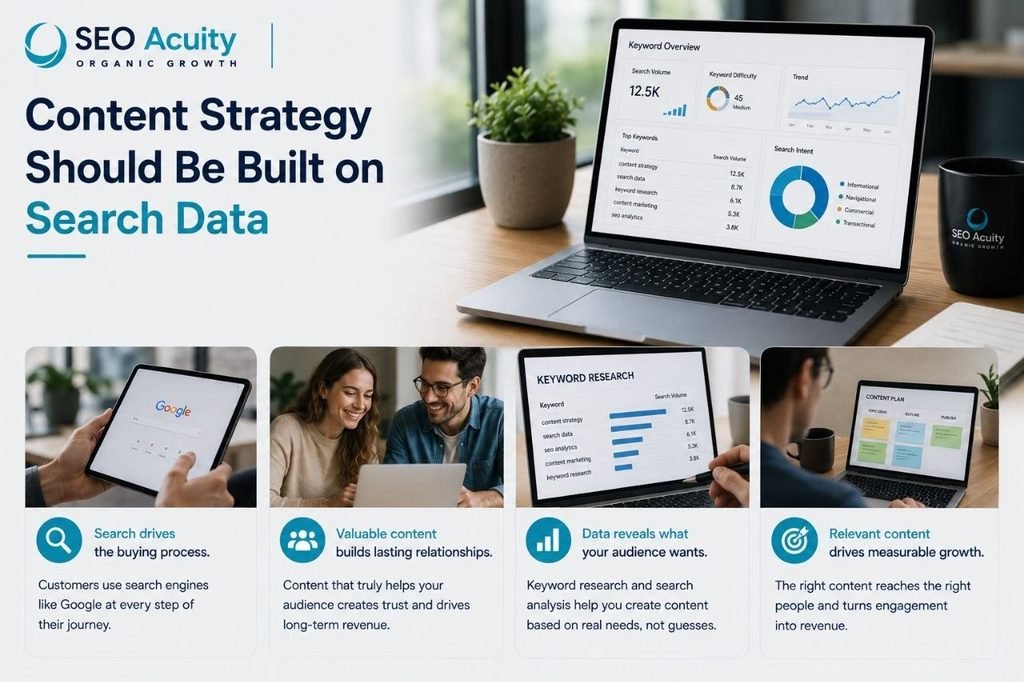
Marketing content has become increasingly important for reaching and penetrating new markets, especially now that search engines like Google play a central role in the buying and selling process.
Content that genuinely matters to customers builds long-term relationships, which in turn increases revenue over time.
Using consumer data particularly keyword research and search analysis makes it possible to build marketing content that is actually relevant to your audience, rather than content based on assumptions.
Read also: What Seo Metrics Are Important To Track? A Complete Guide
Read also: What Is an SEO Specialist?
4. Solve Critical Problems Early in the Planning Stage
Successful e-commerce businesses pay close attention to solving problems that affect their website, whether these issues appear before the site is built, during construction, or after launch.
They avoid rushing into website planning without building in flexibility from the start to accommodate future changes as customer needs evolve.
Ongoing development is essential, and it should be guided by continuous keyword research that reveals what customers actually want.
Monitoring and analyzing the search terms customers use is often more valuable than phone calls or surveys, because customers don’t always articulate exactly what bothers them or what matters most.
Observing their online behavior instead provides genuine, unfiltered insight into their real interests.
Working with a team that offers dedicated SEO services can help catch these issues early, before they turn into costly redesigns or missed opportunities later on.
Read also: How To Measure Seo Performance – A Complete Guide
5. Learn From Senior Economic Leaders and Their Methods
Following the advice of senior business leaders and studying their strategies combined with sound planning and effective management is a valuable habit for any marketer looking to sharpen their own approach.
Marketing to Senior Executives and Economic Decision-Makers
Marketing aimed at senior economic leaders such as company presidents, CEOs, and financial directors requires a strategy built on direct return on investment and precise, data-driven language. Below are the most important tips for reaching this audience successfully.
Focus on Financial Return (ROI)
Executives don’t buy into ideas — they buy into outcomes they can measure. Framing your value in clear financial terms makes it far easier for decision-makers to justify the investment.
- Speak the language of numbers. Avoid vague statements and focus on concrete figures such as cost reductions or profit increases.
- Present real case studies. Show verifiable examples from similar companies that achieved measurable results.
- Offer interactive calculators. Providing tools on your website that let executives estimate potential ROI before making contact can significantly improve engagement.
Build Thought Leadership
Before executives trust a brand with their budget, they want to see it understands the bigger picture. Establishing genuine expertise builds the credibility that drives serious conversations.
- Publish white papers. In-depth research on market trends and upcoming economic challenges positions a brand as a credible authority.
- Share analytical content. High-level economic and industry analysis speaks directly to decision-makers.
- Be present on professional platforms. Long-form articles and professional opinion pieces on LinkedIn tend to resonate strongly with this audience.
Read also: The Benefits of AI in SEO for Businesses
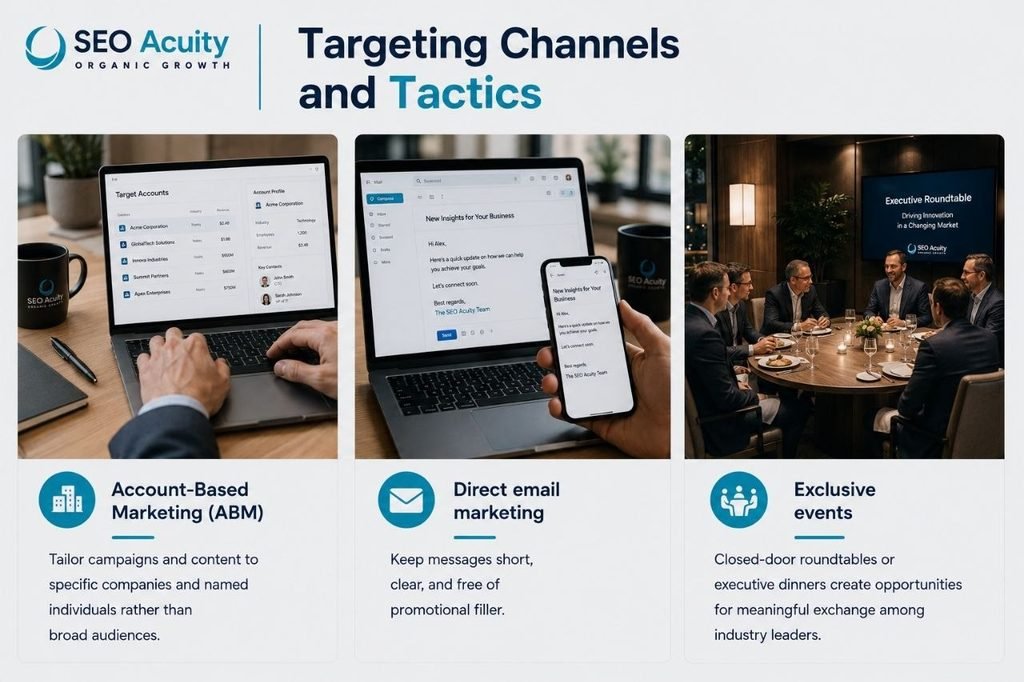
Targeting Channels and Tactics
Reaching executives isn’t about wider reach — it’s about precision. The right channel matters less than how tailored and direct the approach feels.
- Account-Based Marketing (ABM). Tailor campaigns and content to specific companies and named individuals rather than broad audiences.
- Direct email marketing. Keep messages short, clear, and free of promotional filler.
- Exclusive events. Closed-door roundtables or executive dinners create opportunities for meaningful exchange among industry lea• ders.
Respect Time and Prioritize Clarity
Executives operate on limited time and high expectations. Making it fast and easy for them to get to the point is often what determines whether they engage at all.
- Lead with an executive summary. Put the core idea and its benefits in the first 30 seconds of any read or presentation.
- Simplify communication. Offering a direct line or a dedicated account contact for executives helps them avoid long support channels.
Ready to Dominate Search Engine Rankings?
Accelerate your organic growth and scale your business leads with our data-driven SEO strategies.
Get a Free Quote NOW!Improve Local Search Performance (With a Little Help From Google)
As many marketers know, 2021 brought a wave of local SEO updates, including changes to the Google Business Profile (formerly Google My Business).
As the pandemic continues to shape daily life for many businesses, supporting and shopping from local stores has become more popular than ever. That makes a strong SEO strategy essential going into the holiday season and beyond.
Make sure your local data and listings are kept up to date something that has become much easier to manage directly through Google Maps or Search, thanks to the improved usability of the Google Business Profile.
It may sound obvious, but it’s worth double-checking your local business information regularly to confirm it’s current and that all products are properly optimized for Google Search.
1. Build Brand Awareness
If there’s one lesson from the past few years, it’s that competition is fierce, and brand awareness combined with customer loyalty are essential for any business, online or offline.
If you haven’t started already, now is the right time to tell your brand’s story through content across different social platforms.
Show people what makes your brand different, what products or services you offer, and keep your audience updated regularly as you build your brand presence.
Make full use of social media platforms by sharing videos, blog posts, reports, updates, and product content. Done well, this not only promotes your brand but also drives visitors to your website, where they can go on to purchase your products and services.
2. Don’t Overlook LinkedIn
Facebook, TikTok, Instagram, and Twitter (X) remain popular platforms for both personal and professional use, but LinkedIn has also seen significant growth, with notable quarter-over-quarter increases in engagement and monthly active users.
LinkedIn has also introduced useful features marketers can take advantage of, including Stories, polls, and sales tools.
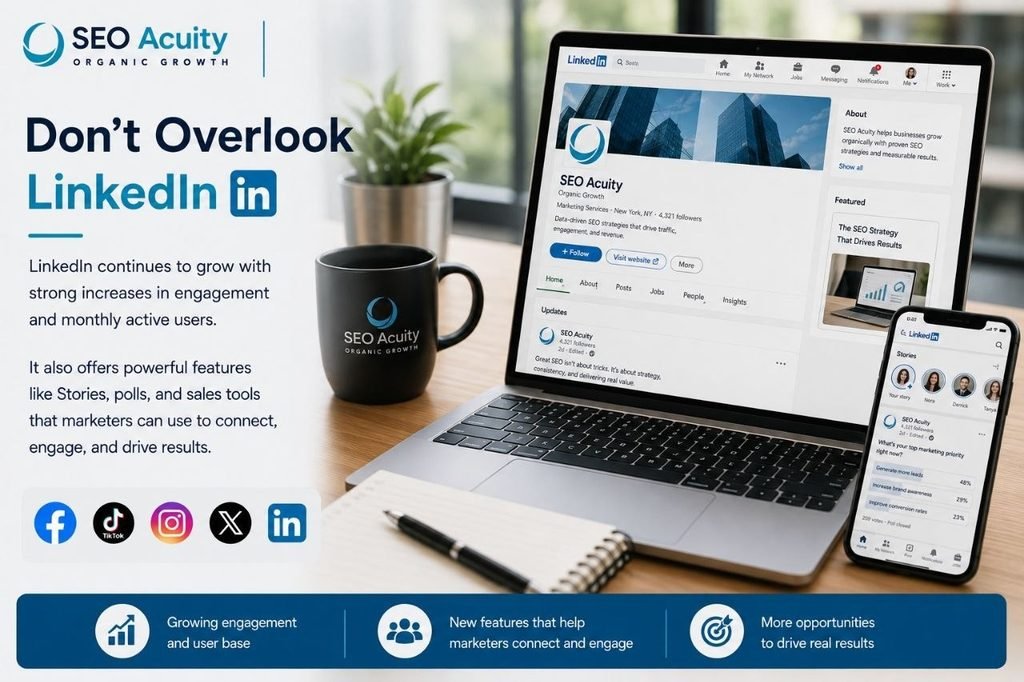
What sets LinkedIn apart is that it’s not limited to a company page employees can also share their own stories about the company, its products, and its culture.
If you haven’t already made LinkedIn part of your strategy, it’s worth building it in fully going forward.
Ready to Dominate Search Engine Rankings?
Accelerate your organic growth and scale your business leads with our data-driven SEO strategies.
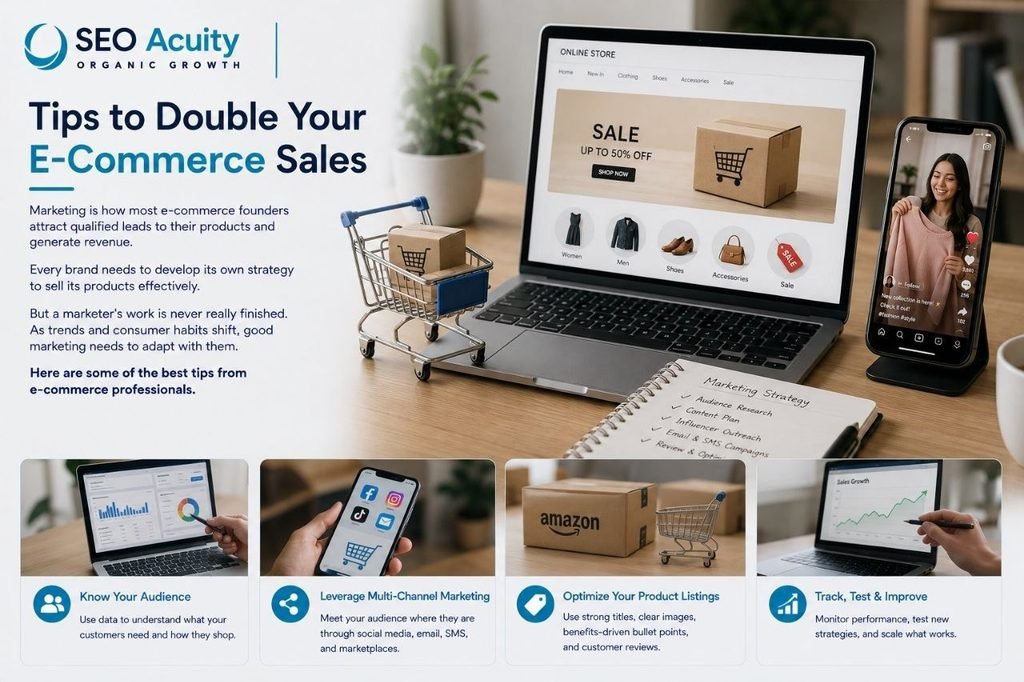
Get a Free Quote NOW!Tips to Double Your E-Commerce Sales
Marketing is how most e-commerce founders attract qualified leads to their products and generate revenue whether that’s through TikTok influencers or targeted SMS campaigns.
Every brand needs to develop its own strategy to sell its products effectively.
But a marketer’s work is never really finished. As trends and consumer habits shift, good marketing needs to adapt with them.
Here are some of the best tips gathered from experienced e-commerce professionals, particularly those selling on Amazon.
1. Draw Inspiration From Community Building
Did you know that companies using a content marketing strategy see conversion rates more than five times higher than those that don’t? That’s because consumers increasingly look for an emotional connection with the brands they buy from.
Creating high-quality content and building an online community are two effective ways to foster that engagement.
2. Continuously Refine Your Product Marketing
When it comes to marketing, the work is never truly done and that’s especially true for existing products.
Messaging that resonated with your audience six months ago may not have the same impact today. That means you need to keep marketing your products, but in new and evolving ways.
3. Nurture Existing Customers Just as Much as New Leads
Expanding your customer base is great for business, but converting new customers into repeat buyers is even more valuable and more cost-effective. Building brand loyalty into your marketing strategy significantly increases customer retention and drives meaningful sales growth.
4. Identify and Invest in What’s Already Working
There’s a fine balance between adapting to changing consumer habits and doubling down on proven, tried-and-true marketing methods. Every marketer needs to find that balance.
Investing in the marketing processes that are already succeeding, and refining that strategy further, tends to drive continued sales growth.
5. Target the Right Traffic on Google and Amazon
It’s easy to get distracted by the latest marketing trends, but knowing where to focus your marketing energy to reach your target audience is essential for success.
Take the time to review which tools and platforms are actually driving results today, and concentrate your efforts on optimizing those channels.
The first step to improving my website’s SEO performance
Start with a clear picture of where your site currently stands what’s working, what isn’t, and where the gaps are. An SEO Audit is typically the most useful starting point before building out a broader strategy.
You can reach out directly to discuss your website and goals. Request a Free SEO Quote to get a sense of how these strategies could apply to your business.
Ready to Dominate Search Engine Rankings?
Accelerate your organic growth and scale your business leads with our data-driven SEO strategies.
Get a Free Quote NOW!Explore SEO Acuity’s SEO Services
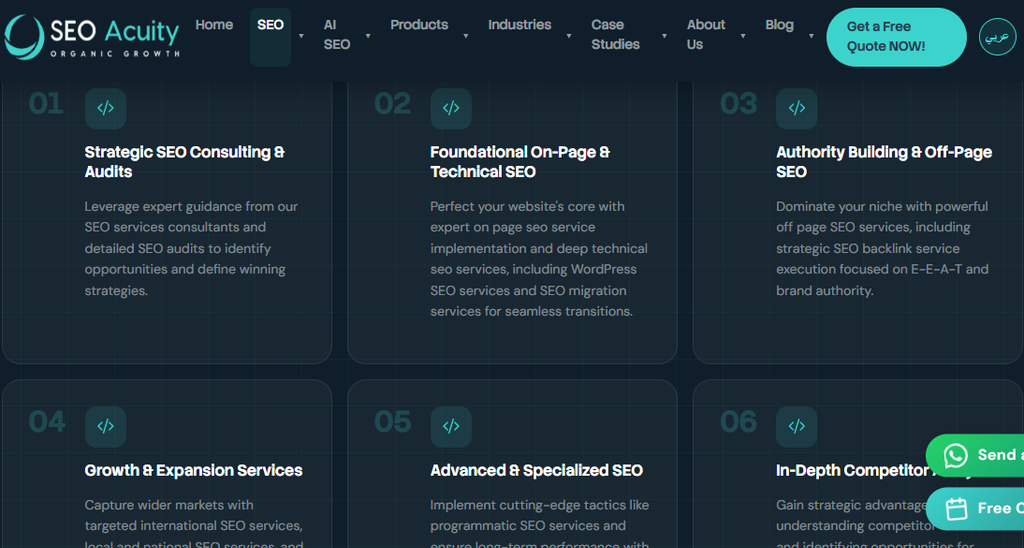
Depending on where your business stands today, different types of SEO support may be more relevant than others. Here are the core services offered:
- SEO Audit Services
- On-Page SEO Services
- Off-Page SEO Services
- Technical SEO Services
- Programmatic SEO Services
- Arabic SEO Services
- Ecommerce SEO Services
- Enterprise SEO Services
- SEO Services for Startups
Final Thoughts
Effective SEO marketing isn’t about chasing every new trend it’s about building a strategy grounded in real search data, genuine customer understanding, and consistent, adaptable execution.
From structuring your site around customer intent to speaking the right language to senior decision-makers, each of these tips works best when applied together as part of a coherent, ongoing strategy.
If you’d like an experienced team to help translate these principles into a strategy tailored to your business, SEO Acuity can help you identify the right opportunities and build a plan around them.
Get in touch for a Free SEO Quote to see how these strategies could apply to your website.
FAQs
What is the difference between on-page and off-page SEO?
On-page SEO covers elements you control directly on your website, such as content, keywords, and site structure.
Off-page SEO involves external factors like backlinks and brand mentions that build authority elsewhere on the web. Most effective SEO marketing strategies combine both.
How long does it take to see results from an SEO marketing strategy?
SEO results typically build gradually rather than appearing overnight, since search engines need time to crawl, index, and re-rank updated content.
Timelines vary based on competition, site history, and the scope of work involved, so it’s best to discuss specifics for your situation directly.
Is SEO still worth investing in for e-commerce businesses?
Yes, e-commerce businesses that align their content and site structure with real search data tend to have a clearer path to reaching motivated buyers.
Search-driven traffic often converts well because it targets people actively looking for specific products or solutions.
How is marketing to senior executives different from typical B2C marketing?
Executive audiences respond better to concise, data-driven messaging focused on ROI rather than broad promotional language.
Tactics like account-based marketing, white papers, and executive summaries tend to perform better than general awareness campaigns.
Does local SEO still matter if my business also sells online?
Yes, especially if you have any physical presence or serve specific regions. Keeping your Google Business Profile accurate and up to date helps you show up in local search results alongside your broader online visibility efforts.
Can AI tools replace traditional SEO strategy?
AI tools can support tasks like research, content drafting, and trend analysis, but they don’t replace the need for a coherent strategy grounded in real search data and business goals.